The Night Shift Creatives: Inside the After-Hours Studios Where American Art Gets Made
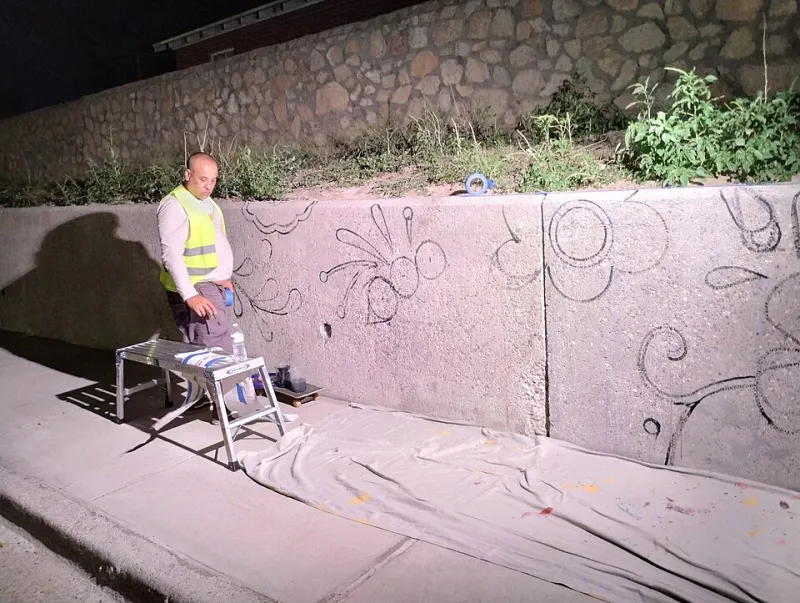
Photo: Megalibrarygirl, CC BY-SA 4.0, via Wikimedia Commons
Walk into Compound PDX in Portland at 11 p.m. on a Tuesday and you'll find a ceramicist firing a test kiln, two producers layering beats in adjacent booths, a graphic novelist spread across a communal table with reference photos and cold brew, and a group of three welders working on a sculpture installation bound for a gallery in the Pearl District. It smells like clay and coffee and something faintly metallic. Everyone is completely in their element.
This is not unusual. This is Tuesday.
Across the United States, a quiet but significant shift is happening in how creative work gets done — and, crucially, when. All-night studios, round-the-clock maker spaces, and 24-hour artist collectives have moved from curiosity to genuine infrastructure in cities from Atlanta to Seattle. They exist because the people who need them work on schedules that conventional creative spaces simply can't accommodate. And the work coming out of them is, by almost any measure, extraordinary.
Why the Night Works
Before we get into the spaces themselves, it's worth asking the obvious question: why night? The answer is more layered than simple insomnia or romantic notions about the muse arriving after dark.
For a lot of working artists, daytime hours are already spoken for. Day jobs, childcare, gig work, side hustles — the economic reality of making art in America in 2024 means that creative time is often whatever's left over. For many people, that's 10 p.m. to 3 a.m. The rise of 24-hour creative spaces is, in part, a direct response to that economic pressure.
But there's also a neurological argument. Research on chronobiology — the science of biological timing — suggests that a meaningful portion of the population is genuinely wired for later sleep and wake cycles. For these so-called "night owls," the hours after midnight aren't a sacrifice. They're peak performance time. Creative spaces that operate around the clock are, effectively, the first professional environments built around that reality.
"I've been told my whole life that I'm lazy because I can't function before noon," says Deja, a music producer based in Atlanta who works out of a 24-hour studio collective called Signal House. "Here, nobody cares what time it is. They only care what you're making."
Signal House, Atlanta
Signal House operates out of a converted warehouse in the Old Fourth Ward, and it runs exactly like it sounds — continuously. The space offers recording booths, mixing suites, a photography dark room, and a large open fabrication area for visual artists, all available on rotating membership plans that don't distinguish between a 9 a.m. session and a 4 a.m. one.
Founded in 2019 by a group of producers and visual artists who were tired of paying day rates for spaces they could only realistically use at night, Signal House now has over 200 active members across disciplines. The overnight hours — roughly midnight to 8 a.m. — are consistently at capacity.
"The community that forms at 3 a.m. is different from the one at 3 p.m.," says co-founder Marcus Webb. "People are more open. The ego stuff kind of falls away. You're not performing professionalism, you're just working. And that leads to collaboration you wouldn't get otherwise."
That's a sentiment echoed everywhere in this world. The social dynamics of after-hours creative spaces tend toward the informal and the collaborative in ways that can feel almost countercultural compared to the competitive, portfolio-driven atmosphere of daytime creative industries.
The Chicago Model: Collective Over Commercial
In Chicago, the after-dark creative infrastructure has taken a slightly different shape. Rather than centralized hubs, the city has seen the proliferation of smaller, neighborhood-level collectives that share resources and operate on flexible, community-governed schedules.
One standout is Nightframe, a visual arts collective based in Humboldt Park that operates a shared studio space open to members around the clock. What makes Nightframe distinctive is its explicit commitment to artists from the neighborhood — predominantly Puerto Rican and Black residents — who have historically been priced out of Chicago's more prominent arts infrastructure.
"The mainstream art world runs on daytime hours and daytime money," says collective member and painter Rosa Delgado. "We built something that works for people who have to work two jobs and still want to make serious art. That means being open at midnight. That means not charging gallery rates."
Nightframe's sliding-scale membership model, which ranges from free for qualifying low-income artists to $85 a month for full access, has become something of a template that other Chicago collectives are beginning to adopt.
New York's Vertical Studios
In New York, where space is the eternal constraint, the 24-hour creative model has had to get creative about square footage. Several buildings in Brooklyn and the Bronx now operate what locals call "vertical studios" — multi-floor facilities where different creative disciplines stack on top of each other, with shared amenities and round-the-clock access managed through app-based booking systems.
Greenpoint's LOFT/LATE is perhaps the most polished example. Across five floors of a former industrial building, you'll find recording studios, a print shop, video editing suites, a podcast production room, and a rooftop that doubles as a photography and film location. The building runs 24 hours, staffed at all times, and its overnight membership tier — marketed explicitly to "professionals who work when the city's quiet" — sold out within weeks of launch.
"New York never really sleeps, but the creative economy used to," says LOFT/LATE's operations director, Priya Anand. "We're just finally building infrastructure that matches the city's actual rhythm."
What This Means for Urban Creative Culture
Zoom out and what you're seeing is more than just a scheduling accommodation. The proliferation of 24-hour creative spaces represents a genuine rethinking of when and how cultural production happens — and who gets to participate in it.
By operating outside conventional hours, these spaces are quietly democratizing access to professional creative infrastructure. They're serving artists who can't afford to quit their day jobs, parents who create after their kids are in bed, immigrants working multiple shifts, and chronotypes that the standard creative economy has always left behind.
The work emerging from these environments is finding its way into galleries, onto streaming platforms, and into public spaces across the country. And the communities forming inside them — forged in the particular intimacy of 3 a.m. collaboration — are producing some of the most vital creative networks in American cities right now.
Back at Compound PDX, it's nearly 2 a.m. and the ceramicist has moved to the communal table to look at the graphic novelist's layouts. Nobody planned this. It's just what happens when you build a place where the work never has to stop.