After Last Call: The All-Night Creative Spaces Rewriting What Nightlife Can Be
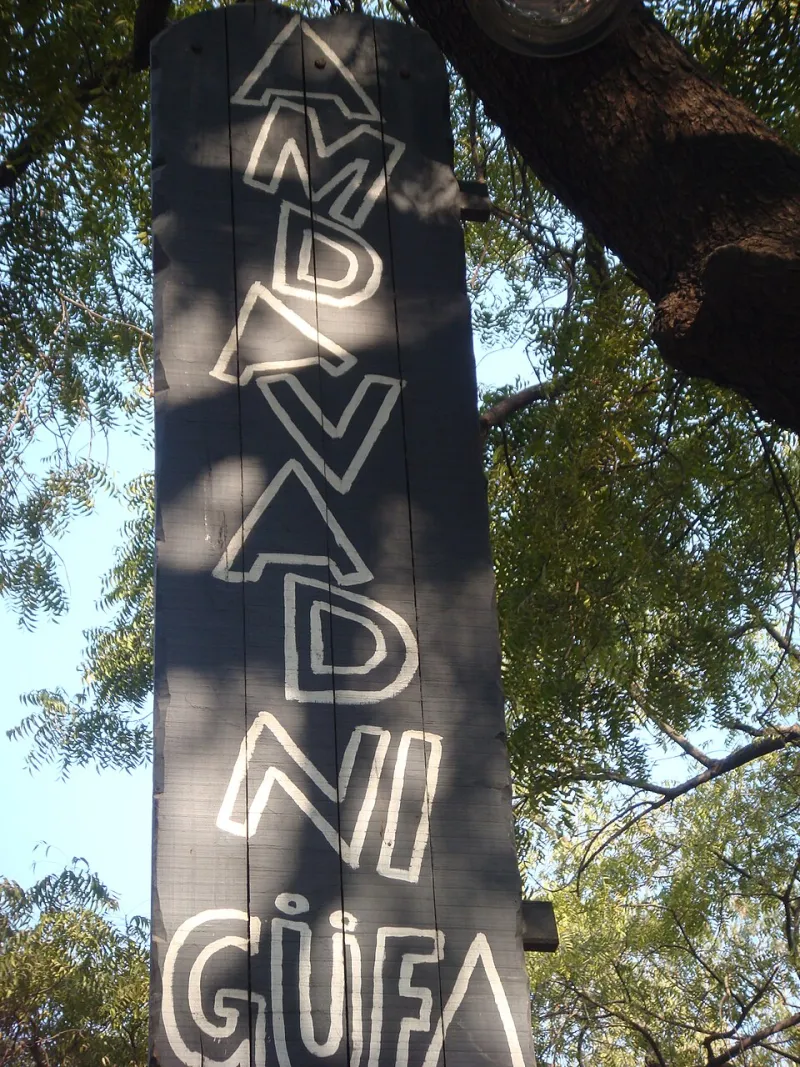
Photo: Ramphrados, CC BY-SA 3.0, via Wikimedia Commons
Somewhere in a converted warehouse in East Oakland, it's midnight on a Thursday and about forty people are watching a 1973 Haile Gerima film projected onto a bedsheet. There's no ticket booth. There's a suggested donation jar by the door and a folding table with homemade food. The host — a filmmaker named Delara who works a day job at a print shop — introduces the film with a ten-minute talk about its historical context. People are taking notes. Afterward, the conversation goes until 2 AM.
This is not a bar. This is not a club. This is not anything that has a Yelp page.
This is what the new American nightlife is starting to look like in the corners where it's most alive.
When the Bars Close, Something Else Opens
For a certain kind of city person — creative, curious, maybe a little broke, definitely not interested in paying eighteen dollars for a cocktail — traditional nightlife has always felt like a bad fit. The options have historically been limited: drink somewhere loud, pay to see a band, or go home. But over the last several years, something has been quietly shifting. An entire ecosystem of alternative after-hours activity has been taking root in cities across the country, built by people who wanted something different and decided to make it themselves.
Call it the insomnia economy. It runs on communal energy, low overhead, and the particular creative freedom that only seems to exist after 11 PM.
"There's a version of nightlife that's about consumption," says Tomás Reyes, who co-runs a late-night maker space in San Antonio that stays open until 4 AM on weekends. "And then there's a version that's about making something. Those are completely different experiences. We built this place because the second version basically didn't exist here."
Reyes and his collaborators converted a former auto body shop into a 24-hour workspace offering access to screen printing equipment, a small wood shop, sewing machines, and a recording corner. On weekend nights, it fills up with people who work day jobs and need the hours after midnight to actually create. Membership is sliding scale. The vibe is chaotic and collaborative and nothing like a WeWork.
Pop-Ups, Projections, and the Art of the Unexpected Venue
One of the defining characteristics of this movement is its relationship to space — specifically, its refusal to wait for the right space. Rooftops, parking structures, empty storefronts, church basements, laundromats after closing time: wherever there's a wall and a willing host, something can happen.
In New York, a collective called Soft Hours has been running rotating pop-up gallery nights in unconventional locations throughout the outer boroughs for the past three years. The locations are announced via text message to a list of about 800 people, usually forty-eight hours in advance. Shows run from 10 PM to 3 AM. There's no alcohol license, so it's BYOB or nothing. The art is almost always by artists who don't have gallery representation and likely won't get it through conventional channels.
"The gallery world has its own version of a velvet rope," says one of Soft Hours' organizers, who asked to be identified only as Priya. "We're not interested in that. We want to show work that matters to this city right now, by people who are actually living in it."
The model has spread. Similar collectives are running irregular pop-up shows in Chicago's Pilsen neighborhood, in South Phoenix, in Houston's East End. The programming ranges from painting and photography to sculpture, installation, and video art. The common thread is the hour and the ethos: late, local, and built for people who actually want to engage.
Reading in the Dark: The Late-Night Book Club Renaissance
Not everything in the insomnia economy is visual. Across the country, a quiet but genuine late-night literary culture has been developing, partly in response to the loneliness of pandemic-era isolation and partly out of a desire for intellectual community that doesn't require a graduate school affiliation.
In Minneapolis, a rotating book club called Past Midnight meets every other Sunday at 11 PM in the back room of a natural wine bar that lets them use the space after the kitchen closes. They've read everything from Octavia Butler to urban planning theory to Haitian poetry. Attendance typically runs between fifteen and thirty people. There's a Discord where the conversation continues all week.
"People are hungry for this," says organizer Dani Okafor. "Like, genuinely starving for a place to think out loud with other people who take ideas seriously. The late-night timing is actually part of it — it weeds out the people who aren't really committed. If you're showing up at 11 on a Sunday, you actually want to be there."
What This Says About Cities Right Now
The rise of the insomnia economy isn't happening in a vacuum. It's a direct response to the conditions of contemporary urban life: rising costs that push artists and creatives to the economic margins, the homogenization of nightlife districts by real estate pressure, a post-pandemic hunger for genuine human connection, and a growing cultural exhaustion with passive consumption.
These late-night creative spaces are also, often explicitly, acts of community resistance. Many are located in neighborhoods facing gentrification. Many are run by people of color who have been systematically excluded from the mainstream cultural economy. Many operate in a legal gray zone that requires a certain amount of institutional invisibility to survive.
"We exist because the city doesn't make space for us," says Delara, the Oakland filmmaker. "So we make our own space. And we do it at night because that's when no one's paying attention."
The City That Never Quite Sleeps
What unites all of these ventures — the maker spaces, the pop-up galleries, the underground screenings, the midnight book clubs — is a shared belief that cities are still capable of surprise. That there's still room for something genuinely unexpected to happen in the margins, in the hours between last call and sunrise, in the spaces that development hasn't gotten around to yet.
Goodnight Traffic City knows this feeling. The traffic never fully stops. The lights stay on. And somewhere out there, in a parking structure or a converted auto shop or a back room that smells like wine and old books, someone is making something that matters — and they started right around the time everyone else decided to go to sleep.