Keepers of the Vanishing City: The Night Archivists Racing to Save What Dawn Destroys
There's a photograph sitting in a manila folder somewhere in a basement in Cleveland. It shows three women standing outside a hair salon on a street that no longer exists — demolished in 1987, replaced by a parking structure that was itself demolished in 2014. Nobody famous is in the picture. Nobody made the news that day. But someone took the shot, someone kept the print, and now someone is scanning it at two in the morning so it doesn't disappear forever.
That someone is part of a loose, largely invisible network of night-shift archivists working across American cities — people who've quietly decided that the unofficial, unglamorous, deeply human record of urban life is worth saving. Not just the monuments and the mayors. The hair salon. The three women. The street that's gone.
The Hours Nobody Else Wants
Ask any archivist why they work nights, and you'll get a version of the same answer: it's when the interruptions stop. No phone calls, no bureaucratic check-ins, no well-meaning visitors who want to tell you about their grandmother. Just the work.
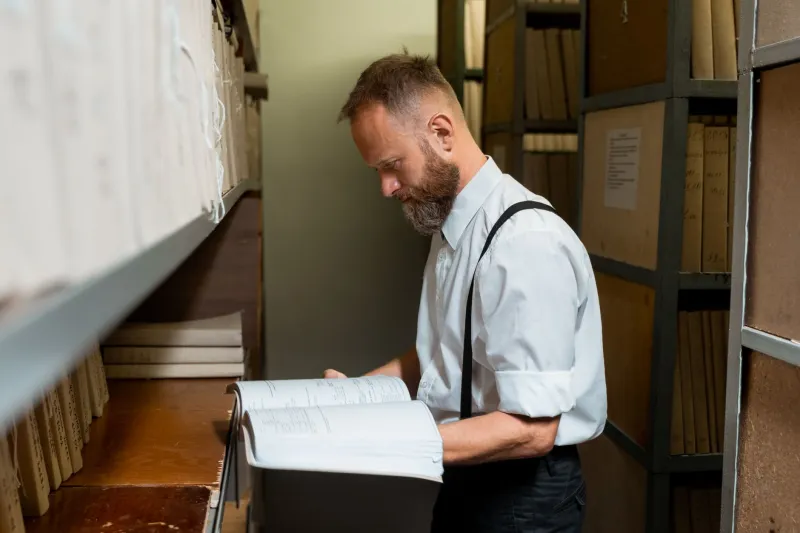
For Marcus Delray, a part-time collections assistant at a mid-sized public library in Detroit, the overnight shift is the only time he can get to the boxes. The library's digitization project — underfunded and perpetually deprioritized — has left thousands of photographs, pamphlets, and neighborhood newsletters sitting in acid-free storage, technically preserved but functionally invisible. Marcus comes in after his day job three nights a week and feeds them through a flatbed scanner while a podcast plays in his earbuds.
"The city has this official story it tells about itself," he says, "and then there's everything else. The block associations, the church bulletins, the flyers for the talent shows. That stuff doesn't make it into the history books. But it's where people actually lived."
He's not alone in that conviction. Across the country — in Philadelphia rowhouses, in Chicago community centers, in the back rooms of New Orleans jazz clubs — independent archivists are doing versions of the same thing. Some are affiliated with institutions. Many aren't. Almost all of them are working without adequate resources, driven by a sense of urgency that only seems to intensify with each passing year.
The Clock That Never Stops Running
Urban memory has a particular fragility. Cities change fast — faster than most people realize until they're standing on a corner where something used to be, trying to remember what it was. Neighborhoods gentrify, buildings get torn down, longtime residents get priced out and scattered. And when people leave, they take their stories with them. Sometimes those stories come back. Usually they don't.
That's the problem oral historian Yolanda Ferris has been trying to solve in the South Bronx for the past six years. Working out of a converted storefront she shares with two other community organizations, Yolanda runs late-night recording sessions with longtime residents — people in their seventies and eighties who remember the neighborhood before and after the fires, before and after the crack epidemic, before and after the most recent wave of development.
"There's a window," she says simply. "And it closes."
Her archive now contains over four hundred hours of recorded interviews, stored on a server she backs up manually every Sunday. She's applied for grants. Some have come through. Most haven't. She keeps going anyway.
What strikes you, listening to even a few minutes of her recordings, is how much texture gets lost in official histories. The way a particular intersection smelled in summer. The name of the guy who ran the numbers out of the laundromat. The specific shade of green on the awning of the bakery that closed in 1991. Small details, sure. But details are how people recognize themselves in history. Without them, the past becomes a series of events that happened to someone else.
Digitizing the Unofficial Record
The archivists who work with physical materials face a race against time that's almost literal. Paper degrades. Photographs fade. Magnetic tape — the format on which an enormous amount of late-twentieth-century urban documentation was recorded — is actively deteriorating right now, in basements and attics and storage units across every American city.
In Los Angeles, a collective called the Overnight Index has been quietly working to address this problem since 2019. The group — currently about fifteen people, ranging from professional archivists to amateur historians to a retired sound engineer named Cliff who "just likes old stuff" — meets twice a month in a warehouse in Boyle Heights to digitize whatever they can get their hands on. VHS tapes of community access TV shows. Cassette recordings of neighborhood council meetings. Zines from the early punk and Chicano rights scenes.
"A lot of this material doesn't belong to anyone anymore," says one of the group's coordinators, who asked to go by her first name, Priya. "The organizations that created it dissolved. The people who made it moved away or died. It just sort of... floats. And if nobody catches it, it's gone."
The Overnight Index has digitized over three thousand items since its founding. It hosts everything on an open-access server and cross-references its holdings with university libraries and municipal archives when it can. The goal isn't to hoard the material — it's to make it findable.
Why the Night Makes Sense
There's something fitting about this work happening after hours. The city's official memory — the stuff that gets put in museums and taught in schools — is a daytime operation. It runs on budgets and committees and press releases. The unofficial memory, the stuff that actually tells you what it felt like to live somewhere at a particular moment, has always been a little underground. A little informal. A little nocturnal.
The archivists doing this work aren't romantic about it. They'll tell you it's tedious, underpaid (or unpaid), and frequently thankless. Scanning a box of faded photographs at 1 AM is not glamorous. Neither is transcribing a two-hour oral history recording or cataloging a collection of church bulletins.
But there's a clarity to it, Marcus says, that's hard to find anywhere else. "You're holding something that nobody else is paying attention to, and you're making sure it doesn't disappear. That's it. That's the whole job."
The city forgets constantly. It's built to — new things come in, old things go out, and the churn keeps moving. These archivists are the friction in that system. The ones who slow it down just enough to make a record.
The photograph of the three women outside the hair salon on the street that no longer exists is now a high-resolution TIFF file on a library server in Cleveland. Someday, maybe, someone will find it and recognize their grandmother. Maybe they'll just find it and wonder. Either way, it'll be there.
That's enough. That's the whole point.