Chasing the Glow: The Midnight Photographers Who Find America's Soul After Dark
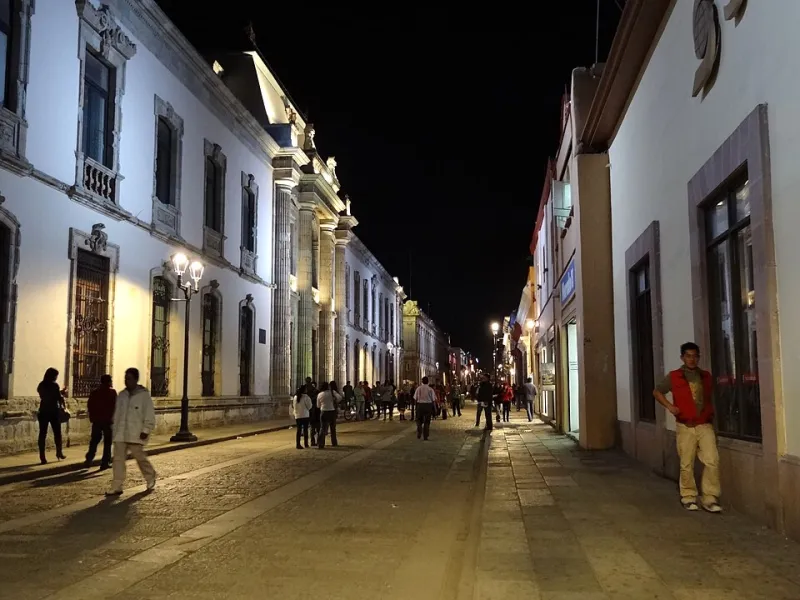
Photo: Adam Jones from Kelowna, BC, Canada, CC BY-SA 2.0, via Wikimedia Commons
Somewhere around 2 AM on a Tuesday, a photographer named Delilah Osei is standing alone at the corner of a rain-slicked intersection in Detroit, waiting. Not for a person, exactly. More for a feeling. The red of a traffic light bleeds across six inches of standing water on the pavement, and she fires the shutter. Nobody walks through the frame. That's the whole point.
Osei is part of a loosely connected movement of photographers who have made the overnight hours their studio, their subject matter, and honestly, their religion. They don't have a name for what they do. Some call it urban nocturnal work. Others just say they shoot at night. But what they're capturing — that particular emotional texture of American cities when the performance of public life has finally shut down — is something you can't manufacture in daylight.
When the City Stops Performing
Daytime photography of city life is, in a lot of ways, photography of a mask. People are aware of being in public. They're dressed for it. Streets are staged. But somewhere between midnight and 4 AM, that mask slips. The city stops trying to be impressive and starts just... existing.
That's the window these photographers live for.
Marco Vidal, who shoots primarily in Chicago's Near West Side, describes the difference as the gap between a city's LinkedIn profile and its journal. "During the day, everything is about function and presentation," he says. "At night, you start to see the infrastructure of feeling. The lonely neon of a laundromat that's still open at 3 AM. A bus shelter where someone left a single shoe. The city's unconscious starts showing."
This isn't just aesthetic preference — it's a genuine shift in visual language. The absence of crowds strips away context in ways that force viewers to sit with images longer. A solitary figure beneath a streetlight becomes a meditation on something bigger than one person's commute home. The viewer has to do more work, and that work creates intimacy.
Neon as Emotional Architecture
If there's one technical obsession that unites these photographers, it's artificial light — specifically the kind that was never designed to be beautiful. Neon signs buzzing above closed diners. Fluorescent strips inside 24-hour pharmacies. The amber pulse of a construction warning light. These aren't glamorous light sources. They're the city's nervous system keeping itself awake out of necessity, and they cast shadows and color that no natural light ever replicates.
Tamara Schell, whose work has appeared in several independent zines out of Brooklyn and Philadelphia, talks about neon the way painters talk about pigment. "Neon lies a little," she says. "It makes things look more dramatic than they are, more melancholy than they are. But that lie gets at something real about how cities feel emotionally. Cities are always overselling themselves. Neon does the same thing at 2 AM and somehow it becomes honest."
Her series Vacancy, shot across a stretch of Route 1 motels in New Jersey, uses the buzzing glow of vacancy signs to explore the idea of American transience — the people who pass through, the lives that don't have permanent addresses, the dignity inside the disposable. It's the kind of work that couldn't have been made in daylight without losing everything that makes it ache.
The Loneliness Question
Critics and viewers often describe this genre as lonely photography, and the artists themselves don't entirely push back on that label — they just reframe it. Loneliness, they argue, isn't the subject. It's the access point.
"People see an empty street and they call it lonely," says Osei. "But I see a space where you can finally hear what the city is saying. Loneliness is just what we call quiet when we're afraid of it."
There's something deeply American about this particular brand of urban solitude, too. The sprawling infrastructure of US cities — built around cars, around separation, around the assumption that people would rather be in private than in public — creates a specific visual grammar of isolation that doesn't quite exist the same way in denser global cities. An empty six-lane boulevard in Phoenix at 3 AM tells a completely different story than an empty alley in Tokyo. The American version always has a little more existential dread in it, a little more space between one human and the next.
These photographers are fluent in that grammar. They know which intersections feel like the end of a sentence and which ones feel like a question.
The Community That Doesn't Sleep
What's interesting is that for all the solitary imagery they produce, the photographers themselves aren't isolated. There's a real, if informal, community built around forums, Instagram comment sections, and the occasional overnight meetup in cities like LA, Houston, and Baltimore. They share locations, talk gear, and — more importantly — talk about why they do this at all.
For many of them, the overnight hours represent a kind of freedom from the noise of the algorithm-optimized, content-saturated daytime world. The work they make at 3 AM isn't optimized for engagement. It's not trying to be relatable. It's trying to be true, which is a different thing entirely.
"Nobody's chasing likes at 2 AM," Vidal says, laughing. "You're just out there with the city and whatever you're actually feeling. That's when the real pictures happen."
And somewhere, right now, in some city that never fully goes dark, a photographer is standing on a wet corner waiting for the light to change into something worth keeping. The city is talking. They're the ones listening.