Last Call Confessions: The Midnight Bartenders Who Know Every Secret This City's Ever Kept
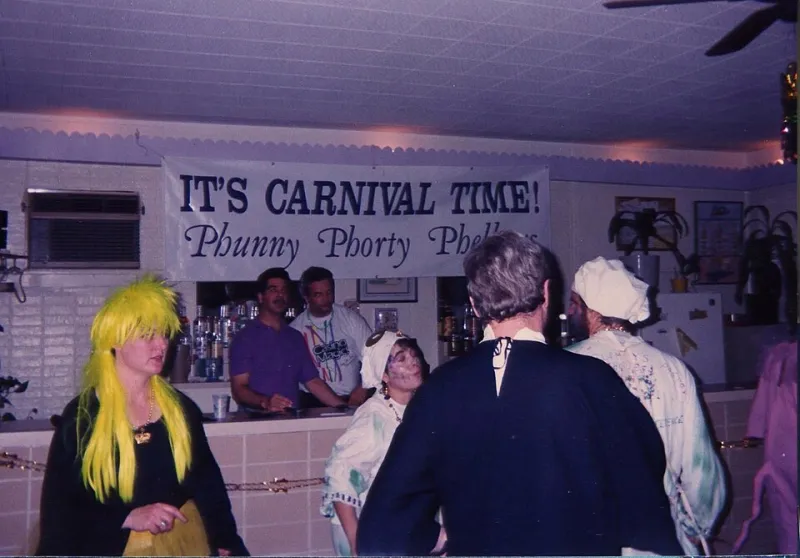
Photo: Infrogmation, CC BY 3.0, via Wikimedia Commons
There's a specific kind of honesty that only surfaces after midnight. The kind that doesn't need an appointment, doesn't require a copay, and gets poured into a rocks glass somewhere between the third drink and closing time. If you've ever sat at a bar at 2 AM and said something true — something you couldn't say anywhere else — you already know what we're talking about.
America's late-night bartenders didn't sign up to be therapists. But somewhere between the ice bins and the speed rail, a lot of them became exactly that.
The Bar as a Third Space
Urban sociologists have long talked about "third spaces" — those public-but-intimate zones that aren't home and aren't work, where community actually happens. The corner bar, especially the late-night variety, is maybe the oldest third space we've got. Ray Oldenburg wrote about it. Bruce Springsteen wrote about it differently. But neither of them spent a decade behind the stick at a Chicago dive bar watching the city undress itself after dark.
Marcela Rios has. She's been bartending in Pilsen for eleven years, the last six of them exclusively on the overnight shift at a neighborhood spot she'd rather not name — "because then it gets crowded," she says with a laugh that suggests she's only half joking. What she's witnessed across that bar, she describes as "a whole television series that nobody's filming."
"People come in after a funeral. After a promotion. After a fight with their mom that's been building for thirty years. They sit down and they start talking, and I think sometimes they forget I'm actually a person — which is fine, honestly. That's the job."
That dynamic — the bartender as a kind of human confessional booth — isn't accidental. It's structural. The physical setup of the bar creates what psychologists call a "side-by-side" interaction, as opposed to the face-to-face model of traditional therapy. You're not staring someone down. You're both looking forward, at the bottles, at the mirror, at nothing in particular. That slight removal of direct eye contact makes it easier to say the thing you've been carrying.
What the Night Unlocks
There's also the simple, chemical reality of the hour. By midnight, the social performance most people maintain through the daylight hours has started to crack. The carefully curated version of yourself — the LinkedIn self, the Instagram self, the one that answers "doing great, you?" on autopilot — that version gets tired. And when it does, something more honest tends to step in.
DeShawn Merritt has been working the late shift at a New Orleans cocktail bar for eight years. He says he can almost tell by the way someone sits down whether they're there to drink or whether they're there to talk. "Sometimes it's both. Usually it's both. But there's a difference between someone who wants to celebrate and someone who needs to be witnessed. You learn to read that fast."
What he describes as being "witnessed" is something therapists would recognize immediately — the fundamental human need to have your experience acknowledged by another person. In a city that moves fast and asks little about how you're actually doing, the bar at 1 AM can become the only place that slows down long enough to ask.
"I've had people tell me things they said they'd never told anyone," Merritt says. "Marriages falling apart. Coming out to themselves, basically, out loud, for the first time. Grief they've been sitting on for years. I'm not a therapist. I want to be clear about that. But I do think I've helped people get to the next morning in one piece."
The Ethics of the Listen
Not everyone is comfortable with the role. Jenna Park, who works a midnight-to-six shift at a 24-hour bar in Seattle's Capitol Hill neighborhood, talks about the emotional labor with a directness that's refreshing.
"It takes something out of you," she says. "You're absorbing a lot of other people's pain, and the bar doesn't exactly offer you a debrief afterward. You close up, you mop the floor, you go home. That's it."
She's thought seriously about the ethics of it — about what it means to serve someone alcohol while they're emotionally vulnerable, about where the line is between supportive and enabling. "I've cut people off not because they were too drunk, but because I could see they were about to say something they'd regret. That's a different kind of judgment call. Nobody trains you for that."
She's right. Bartending school teaches you how to make a Negroni. It does not teach you how to gently redirect a stranger who's crying about their father while three other customers need refills.
Keepers of Urban Folklore
Beyond the individual confessions, there's something else happening in these late-night spaces — a kind of collective memory is being stored. Veteran bartenders are, in a very real sense, oral historians of their neighborhoods. They've watched blocks gentrify and collapse and gentrify again. They've seen which regulars disappeared during the pandemic and which ones came back different. They know which buildings used to be what, who used to live where, which corner used to matter.
Marcela in Pilsen puts it plainly: "I know this neighborhood in a way that no developer's spreadsheet ever will. I know it because it walked through my door every night for a decade and sat down and talked to me."
That knowledge — neighborhood knowledge, human knowledge — lives in these bartenders in a way that doesn't get archived anywhere official. It's not in the city records. It's not in the real estate listings. It's in the memory of the person who poured the drink and listened while the city told on itself.
Goodnight, and Thank You
The bar closes. The stools go up. The lights come on in that brutal, honest way they always do at the end of the night — fluorescent and unforgiving. And the bartender, who has spent the last eight hours holding space for a rotating cast of human beings in various states of need, wipes down the counter one more time.
Somewhere in this city, right now, someone is sitting at a bar and saying something true. And someone behind that bar is listening — really listening — in a way that the city, in all its noise and speed, rarely manages to do.
That's not therapy. But it's not nothing, either. It might be one of the most specifically American things we've got left.