Delivered to Your Door, Not Theirs: The Midnight Economy That's Deepening America's Urban Divide
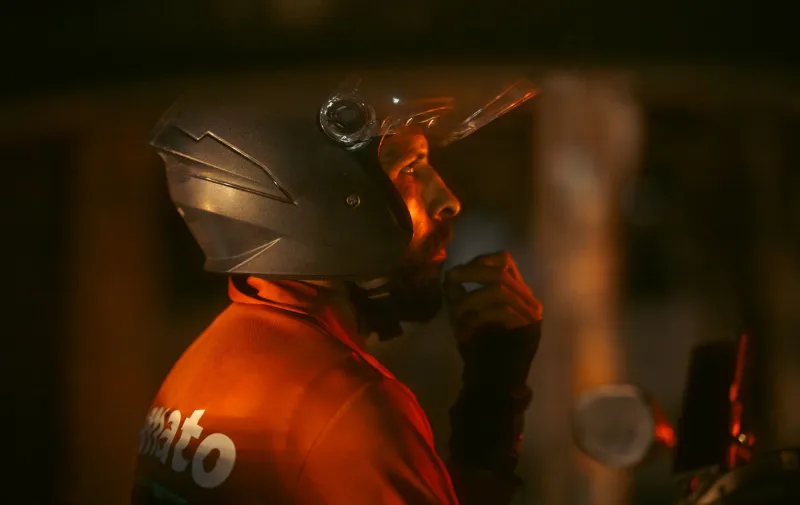
Somewhere around 1:30 AM on a Tuesday, Marcus Webb is double-parked on a tree-lined street in Brooklyn's Park Slope neighborhood, balancing a thermal bag and a phone with a cracked screen. The order — pad thai, spring rolls, a Diet Coke — is worth $38 before tip. The customer, he says, usually leaves two dollars. He's been on the road since 9 PM and this is his eleventh delivery. He'll do four more before calling it a night.
A few miles away in East New York, his cousin Darnell can't get a single delivery app to service his block after midnight. Not reliably, anyway. Restaurants ghost the orders. Drivers decline the zone. "It's like we don't exist to them after dark," Darnell told us over the phone. "The city keeps moving, just not for us."
That gap — between the Park Slopes and the East New Yorks, between the midnight sushi and the empty app screens — is what sociologists and labor researchers are increasingly calling the nocturnal service divide. And it's getting wider.
The Algorithm Doesn't Sleep, But It Does Discriminate
The pitch was always universal. Uber Eats, DoorDash, Instacart, GoPuff — these platforms marketed themselves as the great democratic equalizer of urban life. Hungry at 3 AM? Doesn't matter who you are. Someone will bring it.
Except that's not quite how it works.
Delivery apps use surge pricing, zone mapping, and driver incentive structures that — whether intentionally or not — concentrate late-night service in wealthier neighborhoods. Higher average order values mean higher tips, which means drivers self-select toward those areas. Platforms quietly deprioritize "low-value" zones, reducing restaurant partnerships and driver bonuses in areas where average household incomes are lower.
"It's redlining, but for burritos," says Dr. Priya Anand, a urban sociologist at NYU who has spent three years mapping delivery coverage patterns across five major U.S. cities. Her research found that neighborhoods in the bottom income quartile experience delivery app "dead zones" — periods of near-zero service availability — at nearly four times the rate of top-quartile zip codes. Those dead zones cluster most heavily between 11 PM and 4 AM.
"The midnight hours are when the inequality is most visible," Anand explains. "During the day, there's enough driver volume that coverage is more even. But at night, drivers make choices. And those choices follow the money."
The Workers in the Middle
Here's the brutal irony: the people most harmed by the nocturnal service divide are also the people powering it.
Gig delivery workers — overwhelmingly people of color, immigrants, and working-class city residents — are themselves often locked out of the very services they provide. They work the overnight shifts because the daytime gigs are already saturated. They navigate empty streets, erratic restaurant hours, and customers who sometimes don't bother to buzz them in. And they do it without benefits, without guaranteed minimums in most states, and without the kind of algorithmic transparency that would let them truly understand why their earnings fluctuate so wildly night to night.
Marcus Webb has been doing this for three years. Before that, he worked at a warehouse in Jersey City. "At least there I knew what I was making," he says. "Now every night is a gamble. Some nights I clear $200. Some nights I'm out here for six hours and make $80."
The variance isn't random. It tracks with zone, time, and a constellation of app-side factors that workers are rarely given full visibility into. Researchers who've studied gig platform data note that drivers in lower-income neighborhoods often receive less favorable algorithmic placement — fewer "priority" assignments, longer wait times between orders — even when their ratings are equivalent to drivers in wealthier areas.
For workers like Webb, the city's late-night geography becomes a kind of daily negotiation. You learn which blocks are worth it. You learn which restaurants will have your order ready and which will make you wait twenty minutes in the cold. You develop a mental map of the city that has nothing to do with landmarks and everything to do with economics.
What We're Really Ordering at Midnight
Step back from the individual stories and a larger cultural picture comes into focus. The explosion of 24-hour delivery isn't just a convenience story — it's a story about what American cities have decided to value, and who gets to participate.
GoPuff, which operates micro-fulfillment warehouses stocked with snacks, alcohol, and household essentials, has become a case study in how late-night infrastructure gets built around consumer spending power. Their warehouse locations skew heavily toward gentrifying neighborhoods and affluent urban cores. It's not a conspiracy — it's a business model. But the effect is the same: midnight convenience becomes a luxury good, unevenly distributed across the city's geography.
And then there's the cultural dimension. Late-night food has always been part of urban identity — the 24-hour diner, the corner bodega, the taco truck that appears at 2 AM like a miracle. Those institutions were, in their own imperfect way, democratic. The bodega doesn't check your credit score. The taco truck doesn't have a surge fee.
Delivery apps, by contrast, encode economic sorting into every transaction. The city's nightlife doesn't disappear — it just becomes tiered.
Can Cities Push Back?
Some are trying. New York City's landmark gig worker minimum pay law — which went into effect in 2023 — set a per-mile, per-minute floor for delivery workers, resulting in meaningful wage increases for many. Seattle and Chicago have pursued similar measures. These policies don't fix the geographic inequality, but they do put more money in the pockets of workers who've long been squeezed by the platforms.
Other advocates are pushing for delivery zone equity mandates — requirements that platforms maintain consistent service coverage across income levels, particularly during overnight hours. It's a harder policy fight, and the apps have pushed back aggressively, arguing that driver behavior can't be legislated.
Dr. Anand is skeptical that regulation alone will close the gap. "The underlying incentive structures are still there," she says. "If you don't change the economics of why drivers choose certain zones, you're just papering over the problem."
What might actually help, she argues, is a combination of minimum earnings guarantees, transparent zone data shared with municipalities, and investment in community-owned delivery infrastructure — worker cooperatives, municipal logistics programs — that aren't optimizing purely for platform profit.
The City After Dark Belongs to Everyone — Or It Should
Marcus Webb finishes his shift around 3 AM most nights. He drives home through streets that are quiet but never quite empty — other drivers, night-shift workers, the occasional cluster of people outside a bar. The city hums at a lower frequency, but it doesn't stop.
He doesn't use delivery apps himself. Too expensive, he says. When he wants food late, he goes to the bodega two blocks from his apartment in Crown Heights. "They know me there," he says. "That's the thing about the neighborhood spot — they actually know you."
That's what's at stake in all of this. Not just who gets their pad thai at 1:30 AM, but what kind of city we're building in the dark — who it serves, who it ignores, and who it makes invisible. The delivery apps are just the latest infrastructure layered onto an urban landscape that has always been contested terrain.
The city never sleeps. But it doesn't wake up the same way for everyone.