What the Night Shift Saw: The Accidental Historians Keeping America's Cities Honest
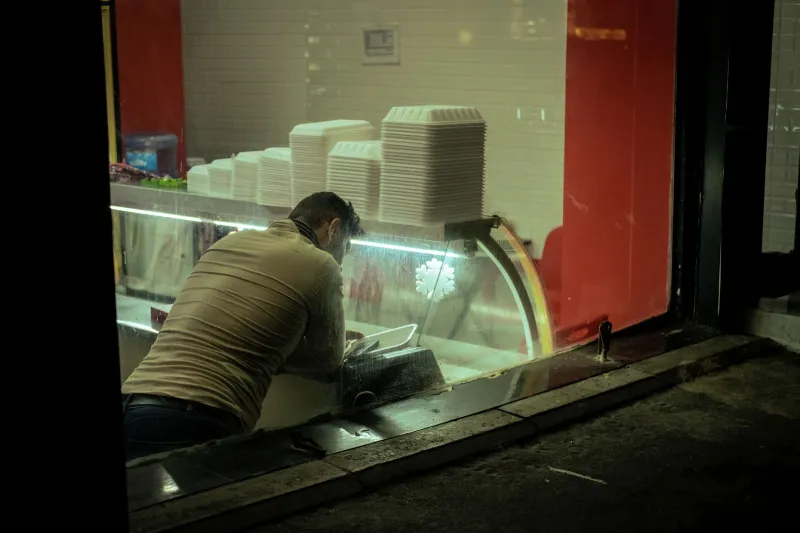
There's a particular kind of knowledge that only comes from being somewhere when nobody thinks anyone important is watching. It lives in the bones of a hospital custodian who's mopped the same corridor for twenty-two years, in the logbooks of a transit worker who rode the same overnight bus route through three rounds of neighborhood demolition, in the quiet observations of a security guard who watched a beloved community mural get whitewashed at 4 a.m. on a Tuesday.
Nobody assigned these people the job of remembering. But they did it anyway.
The Invisible Witnesses
Across American cities — from Chicago's South Side to East Oakland to the outer boroughs of New York — a loose, largely unorganized network of graveyard shift workers has been accumulating something universities and historical societies have spent decades trying to manufacture: genuine, unfiltered testimony about how cities actually change.
Not the polished narrative in the developer's brochure. Not the neighborhood profile in the lifestyle magazine. The real version — the one where you watched the corner store get boarded up, then watched it become a juice bar, then watched the juice bar price out the people who used to lean against that corner store's wall every single morning.
"I've seen four different 'revitalizations' of this neighborhood," says Marcus, a 54-year-old overnight security guard at a downtown parking structure in Detroit who asked us not to use his last name. "Every single one of them looked exactly the same. New paint, different people, same story."
Marcus keeps a personal journal — has for eleven years. It started as a way to stay sharp during slow shifts. Now it reads like urban anthropology.
When Memory Becomes Method
What's starting to happen — slowly, organically, in the way that actually meaningful cultural shifts tend to happen — is that some of these workers are being recognized as legitimate sources. Oral history projects in cities like Philadelphia, Houston, and Los Angeles have begun deliberately recruiting graveyard shift workers as primary interview subjects, not just as color commentary but as central voices.
The Philadelphia-based project Overnight Philly, run out of a community archive collective in Kensington, has gathered over 340 recorded testimonies from night workers since 2019. Hospital janitors describing which neighborhoods' patients started showing up more frequently after a specific factory closure. Bus drivers charting the slow migration of unhoused communities as shelter policies shifted. Security workers at construction sites who watched entire blocks of affordable housing come down in real time, often before any public notice was filed.
"These folks have longitudinal knowledge," says one archivist affiliated with the project who works with multiple city-based oral history initiatives. "An academic researcher might study a neighborhood for two years. A night shift worker might have twenty years of daily, embodied experience in that same space. That's not anecdotal. That's primary source material."
Gentrification's Night Shift
One of the sharpest edges of this emerging movement is the way night workers document gentrification in granular, unromantic detail — the kind that gets scrubbed from official accounts almost immediately.
In cities undergoing rapid transformation, the graveyard shift is often when the actual mechanics of displacement happen. Construction crews working overnight to minimize permit scrutiny. Moving trucks showing up at odd hours. The slow disappearance of certain regulars from certain spots, replaced by new faces who don't know the neighborhood's name from five years ago.
Night transit workers in particular occupy a unique vantage point. They watch ridership patterns shift as communities move further from city centers. They're among the first to notice when a line that once carried working-class commuters home starts running emptier and emptier in one direction.
"You can track gentrification on a bus route," one overnight MTA bus operator in Brooklyn told a community radio program last year. "I've been driving the same route for sixteen years. I can tell you the exact year certain stops stopped being busy."
That kind of statement, recorded and archived, is exactly what historians working fifty years from now will wish they had more of.
The Custodians of Institutional Memory
Hospital workers occupy a particularly profound position in this informal archive. Night shift custodians, orderlies, and support staff often develop deep familiarity with the communities their institutions serve — sometimes more than the clinicians who rotate in and out.
In cities where public hospitals have been shuttered or privatized, these workers carry memory of what those institutions meant to neighborhoods that have since been left without accessible care. In some cases, they're the only people left who remember the specific texture of that loss.
A custodian at a converted former public hospital in a mid-sized Midwestern city — now a boutique hotel — described walking past the building recently. "I worked there for fourteen years. Delivered babies in that hallway once, during a storm, when we couldn't move the mother in time. Now it's a rooftop bar." She paused. "I don't think the people drinking up there know what that floor used to be."
That gap between what a place was and what it's become — and who holds the knowledge of that gap — is exactly what these emerging archival efforts are trying to close.
Amplifying the Record
Some of the most exciting work happening in this space sits at the intersection of community organizing and creative documentation. Zine makers, podcast producers, and independent documentary filmmakers have started collaborating with night workers to get these stories out in forms that feel accessible rather than academic.
In Los Angeles, a collective called Third Shift Archive has been producing short audio documentaries featuring night workers as lead narrators, mapping their testimonies onto the specific streets and intersections they describe. The result is something between oral history and sound art — a city heard from the inside out, through the ears of people who were there when the lights were off and the decisions were being made.
The work isn't trying to be nostalgic. It's not a lament for a lost city. It's something sharper and more necessary: an insistence that the people who actually witnessed what happened get to be part of the official story.
Clocking In for the Record
Here's the thing about memory: it doesn't wait for the right moment to be collected. It erodes. It retires. It moves to another city when the rent gets too high.
The graveyard shift workers who've been quietly watching American cities transform, displace, rebuild, and erase themselves are getting older. Some of the most important witnesses to urban change over the last three or four decades are already gone. The ones still here are still clocking in, still watching, still carrying knowledge that no database has captured.
If American cities are going to reckon honestly with what they've become and what they've destroyed in the process, they're going to need to hear from the people who were there when the rest of the city was asleep.
The night shift has been keeping the record. It's past time the rest of us started listening.