Star Charts at Midnight: The Urban Mystics Decoding America's Cities Through the Cosmos
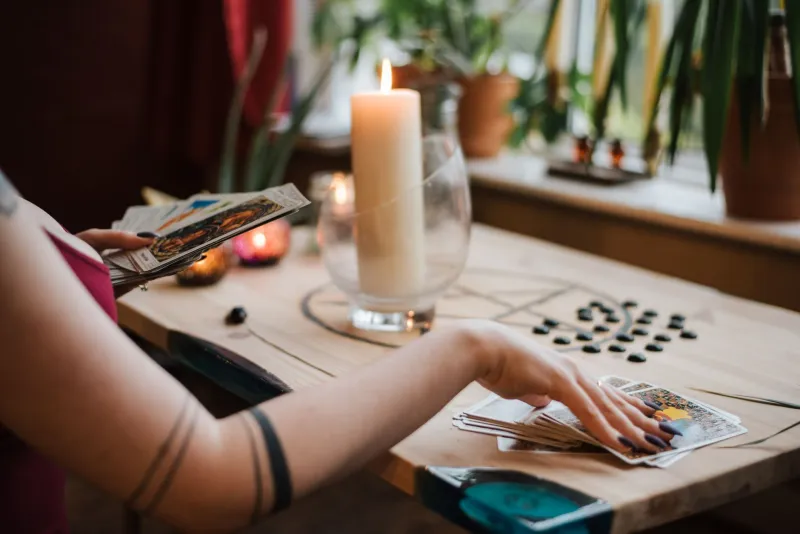
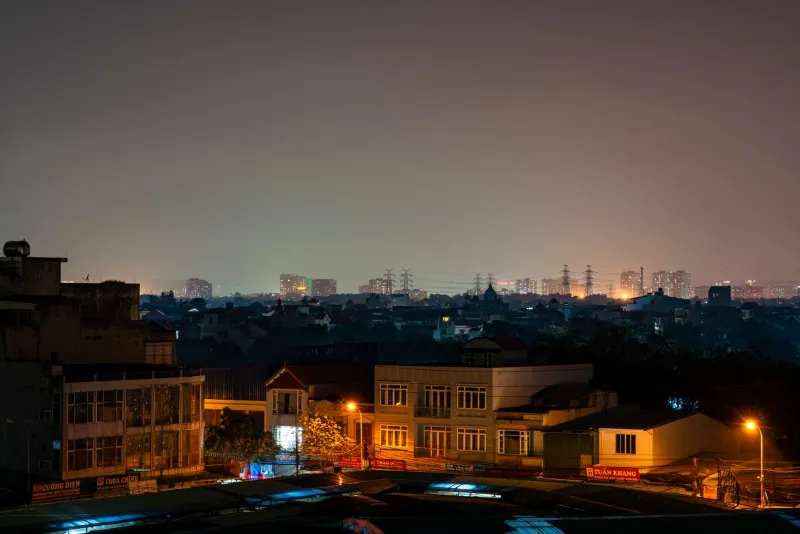
It's 1:47 AM on a Thursday in Chicago's Pilsen neighborhood, and Marisol Vega is unrolling a velvet cloth across a folding table she's set up on a friend's rooftop. The skyline pulses orange and white to the north. Below, a delivery driver idles at a red light. Above, somehow, impossibly, a few stars push through the light pollution. Marisol lights a candle, sets out her cards, and waits.
She doesn't have to wait long.
By 2 AM, three people have climbed the stairs — a night-shift nurse still in scrubs, a rideshare driver on a break, and a 24-year-old graphic designer who says he hasn't slept properly in six months. None of them knew each other before tonight. All of them found Marisol through a private Instagram account that posts locations the night before with no explanation beyond a time and a neighborhood.
"The city talks to you differently after midnight," she says, shuffling the deck with practiced ease. "The noise drops away. People stop performing. That's when the real questions come out."
The Midnight Spiritual Economy
Across the US — in Brooklyn lofts, LA strip mall back rooms, Houston warehouse corridors, and Atlanta basement studios — a loose, largely ungoogleable network of after-hours spiritual practitioners has taken root. These aren't the neon-lit psychic parlors of a previous generation, though those still exist and deserve their own respect. This is something newer, more community-driven, and deeply tied to the specific texture of city life in the 2020s.
Astrologers are hosting rooftop chart readings timed to planetary transits. Tarot collectives are running sliding-scale midnight pop-ups in neighborhoods that haven't seen a wellness dollar in decades. Reiki practitioners are offering sessions in the back corners of late-night record stores. Some of these folks operate entirely through word of mouth. Others have built five-figure monthly followings on platforms that the wellness industrial complex hasn't quite figured out how to monetize yet.
What they share is a commitment to the hours the rest of the city has written off.
Why Now, Why Midnight
The timing isn't arbitrary. Ask any of these practitioners why they work after dark and you'll get variations on the same answer: daytime is too loud, too rushed, too transactional. The city in daylight hours is optimized for productivity. It doesn't leave much room for sitting with a stranger and asking whether your life is going in the right direction.
Night changes the math. The city's ambient pressure drops. The people who show up at a midnight tarot pop-up aren't there because it's convenient — they're there because something pulled them out of bed or off the couch or out of a late shift. That kind of intentionality creates a different quality of conversation.
There's also something worth naming plainly: urban anxiety in America is at a sustained high. Housing costs, job instability, social fragmentation, the low-grade dread of doom-scrolling at 2 AM — these aren't abstractions for the people sitting across from Marisol's velvet cloth. They're the actual texture of daily life. And institutional support — affordable therapy, community mental health resources, genuine neighborhood connection — remains unevenly distributed at best.
"I'm not a therapist and I don't pretend to be," says Darnell Okafor, an astrologer based in Crown Heights, Brooklyn, who runs a monthly late-night gathering in a community garden. "But I do think there's something real about giving people a framework — stars, cards, whatever — to talk about what they're actually going through. The framework is almost beside the point. The conversation is the thing."
Reading the City in the Chart
What makes the urban iteration of this practice distinct is how thoroughly it's been shaped by city life itself. These aren't practitioners retreating from the metropolis into mysticism — they're using the tools of their trade to map the city's emotional landscape in real time.
Some astrologers have developed what they call "city charts" — natal charts cast for the founding dates of American cities, which they use to contextualize what their clients are experiencing. Others read the urban environment itself as a kind of living text. The placement of a highway. The gentrification scar running through a neighborhood. The way certain blocks feel heavy with history and others feel hollowed out.
In Los Angeles, a collective called Tierra y Estrellas runs monthly rooftop sessions in Boyle Heights where astrology intersects explicitly with community history and displacement. Their readings aren't just personal — they're political. They're asking what it means to be a person in this body, in this neighborhood, under these stars, at this particular moment in a city that keeps trying to erase you.
"The stars don't care about your rent," says one of the collective's co-founders, who goes by Luna. "But the people looking at the stars do. That's where the work actually happens."
The Community That Builds After Dark
Perhaps the most underreported dimension of this scene is what happens between the readings. The community that forms around these late-night gatherings is, by most accounts, unusually durable. People who met at a midnight tarot pop-up end up forming mutual aid networks, creative collaborations, genuine friendships. The shared experience of being awake and searching at 2 AM creates a particular kind of bond.
Marisol has watched this happen repeatedly on her Chicago rooftop. The nurse and the rideshare driver from that Thursday night? They've been back four times. They brought friends. One of them started a small lending library on their block. "I don't think that's about astrology," she says. "I think that's about people realizing that other people are also awake, also uncertain, also trying to figure it out."
That might be the most honest thing the midnight divination boom is telling us about American city life right now. The demand isn't really for prediction. It's for presence. For someone to look you in the eye at 2 AM and say: you're not alone in this, and the questions you're carrying are worth asking.
The city keeps running. The traffic keeps moving. And somewhere on a rooftop, a candle burns, a deck gets shuffled, and the stars — the few that make it through the glow — do their slow, indifferent work while the people below try to make meaning out of all of it.
Which, when you think about it, is exactly what cities have always been for.