Saving the Stacks: The After-Hours Book Rescuers Refusing to Let America's Libraries Die Quietly
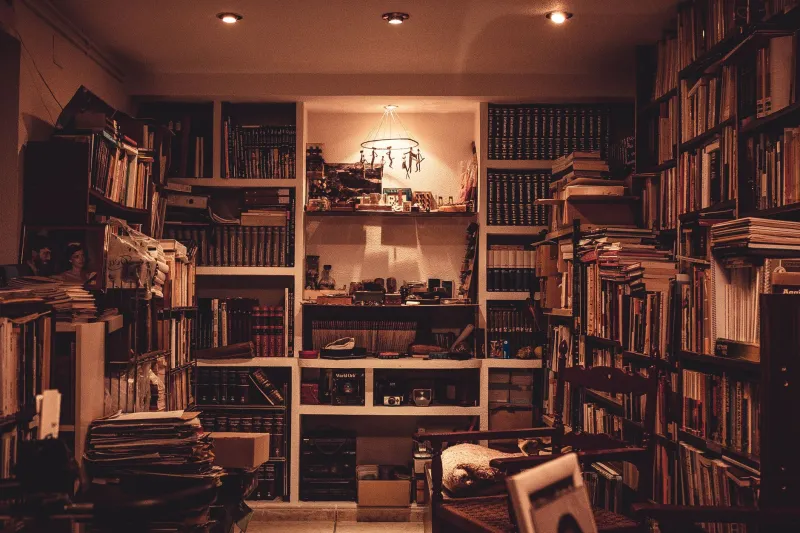
Somewhere in a mid-sized American city — let's say it's after eleven, let's say the streetlights are doing their best — a woman named Drea is loading cardboard boxes into the back of a borrowed pickup truck. The boxes are heavy. They're full of books. The building she's pulling them from is dark, its hours permanently reduced, its collection marked for disposal. By morning, a lot of what she's carrying would have been garbage.
Drea isn't stealing. Technically. The line gets blurry fast when you're talking about public resources being quietly erased from public life.
When the Lights Go Out on Knowledge
America's public library system is in crisis, and it's not the kind of crisis that gets a lot of primetime coverage. It happens slowly, in budget meetings and city council votes and quiet announcements buried in municipal newsletters. Branch closures. Reduced hours. Collection purges — the industry term is "weeding," which sounds almost gentle until you realize it means tens of thousands of books being tossed into dumpsters or pulped because a library no longer has the shelf space, the staff, or the funding to keep them.
According to the American Library Association, hundreds of branch libraries have closed or dramatically scaled back operations over the past decade, with low-income urban neighborhoods absorbing the worst of the cuts. These aren't abstract statistics. These are the places where kids did homework, where newly arrived immigrants learned English, where unhoused people had somewhere warm and dignified to exist for a few hours. When the library goes dark, it doesn't just take the books. It takes the whole ecosystem.
And that's where the midnight librarians come in.
The Network Nobody Officially Knows About
There's no official name for what these people do. They don't have a nonprofit status or a slick website or a hashtag. What they have is group chats, pickup trucks, storage units, and an almost fanatical commitment to the idea that books belong to people — not to landfills.
The operations vary city to city. In some places, it's former library employees who know which collections are being deaccessioned and quietly tip off volunteers before the disposal trucks arrive. In others, it's community organizers who've built relationships with library administrators willing to look the other way while boxes get quietly walked out the back. Some groups work entirely in daylight, operating through official donation channels. Others — the ones who move after dark, who work fast and ask few questions — exist in a grayer zone.
"We're not trying to be romantic about it," says Marcus, a former public school librarian in the Midwest who now coordinates what he calls a "book redistribution collective" out of a rented warehouse space. "We're trying to solve a practical problem. There are books. There are people who need books. The institution that was supposed to connect them has failed. So we do it ourselves."
The collective has redistributed over 40,000 volumes in the last three years, moving titles through a network of Little Free Libraries, community fridges, mutual aid hubs, barbershops, laundromats, and church basements. The goal isn't preservation in the archival sense — it's circulation. Getting the books back into hands.
The Ethical Weight of the Work
Not everyone in the library world is comfortable with what these groups are doing, even the sympathetic ones. There are genuine tensions here. Public collections are public property, governed by law and policy. The decision to deaccession a book — to remove it from a collection — is supposed to follow a professional process. When volunteers intercept that process, even with the best intentions, they're operating outside institutional frameworks that exist for real reasons.
"I understand why people do it," says one library administrator who asked not to be named. "I've cried over collections I've had to let go. But there's also a reason we have policies. Not every book that gets weeded should be saved. Some of them are outdated, inaccurate, or genuinely harmful. The people doing this aren't always equipped to make those calls."
It's a fair point, and the midnight librarians mostly acknowledge it. Marcus says his group tries to prioritize fiction, local history, and practical nonfiction — categories where the calculus is simpler. They're less interested in saving a 1987 medical textbook than in preserving a collection of poetry by a local author that's about to disappear entirely from public access.
The emotional toll is harder to quantify. Several people involved in these networks describe a specific kind of grief that comes with the work — the grief of handling books that whole communities once relied on, knowing that the infrastructure that made that possible has been systematically dismantled.
"You pick up a copy of something and there's a checkout card in the back," says Yolanda, a volunteer in a Southern city who found her way to the work after her neighborhood branch closed. "And you can see the names, the dates. Someone checked this out every year for twenty years. That's a relationship. That's a life. And now it's in a box in my car because the city decided it wasn't worth funding."
What Gets Saved, What Gets Lost
The books that make it into these informal networks are the lucky ones. A lot doesn't. Rare local histories. Out-of-print community newspapers on microfilm. Entire language sections — Haitian Creole, Vietnamese, Amharic — that represented the only publicly accessible texts in those languages for miles. Once those collections are gone, they're gone. No volunteer network can fully replace what institutional failure destroys.
What the midnight librarians are doing is triage, and they know it. They're not solving the problem. They're buying time, keeping something alive while the larger fight plays out in city halls and state legislatures and the ongoing national argument about what public goods are actually worth protecting.
Some of them are also getting louder. Several of these informal networks have started showing up at budget hearings, bringing boxes of rescued books as visual testimony. Others are partnering with local journalists and city council members to document what's being lost. The after-hours work is increasingly connected to very daylight-hours advocacy.
The City That Reads in the Dark
There's something deeply consistent about this work and the city it happens in — the city that never really sleeps, that does its most honest business in the hours when nobody's watching. The midnight librarians fit a long tradition of urban resistance that operates in the margins, in borrowed time, in the spaces institutional power has vacated.
The books they save end up in some unlikely places. A thriller in a laundromat in Baltimore. A collection of Langston Hughes in a barbershop in Detroit. A dog-eared copy of The House on Mango Street in a Little Free Library bolted to a fence in a neighborhood where the nearest branch is now a closed storefront.
Someone will find it. Someone always does. That's the bet the midnight librarians are making — that the appetite for stories, for information, for the particular comfort of a book, outlasts every budget cut and every institutional failure.
So far, they're not wrong.