Roots After Dark: The Secret Plant Network Quietly Turning America's Dead Zones Green
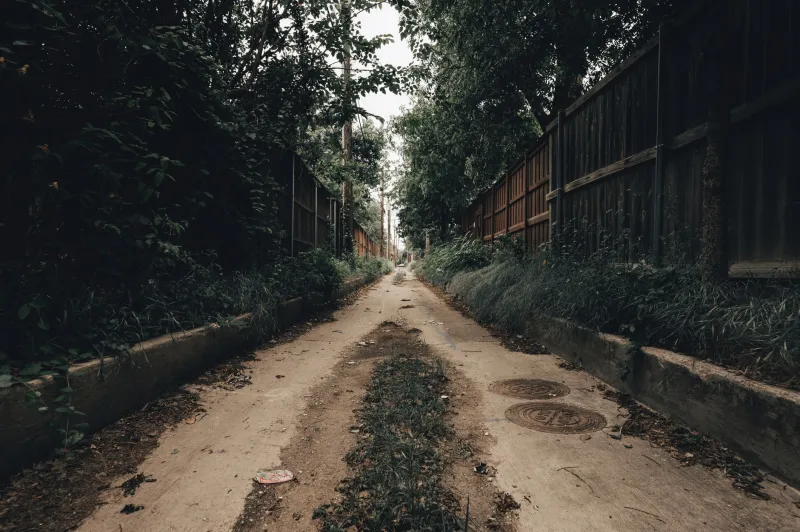
Somewhere in a Chicago alley that smells like old dumpster and exhaust, a woman named Terri is crouched next to a chain-link fence at 1:30 in the morning. She's got a trowel, a headlamp, and a plastic bag full of soil amendments she mixed herself. She's planting a passionflower vine against a concrete retaining wall that hasn't seen intentional human care since maybe the Carter administration. Nobody asked her to do this. Nobody's paying her. She'll be gone before the neighborhood wakes up.
This is what the underground urban gardening movement looks like on a Tuesday night — quiet, purposeful, and almost entirely invisible to the people who'll eventually walk past a suddenly blooming wall and wonder how that got there.
The Night Has Always Been Growing Season
You probably know about guerrilla gardening in the abstract — the general idea that people plant things in spaces they don't own. But what's been building quietly over the last decade in cities from Portland to Philadelphia is something more organized, more intentional, and frankly more fascinating than someone tossing a seed bomb into a vacant lot.
Nocturnal plant networks operate through group chats, encrypted forums, and old-fashioned word of mouth. Members share cuttings, trade rare specimens, and coordinate planting runs the way a tight-knit music scene coordinates warehouse shows — loosely enough to stay flexible, tightly enough to actually get things done. The night isn't just cover. It's a philosophy. The city's ambient chaos drops away after midnight. The streets belong to a different kind of person, and these gardeners have claimed their slice of that quiet.
"There's something about working at 2 AM that strips away all the performance of it," says Marcus, a landscape designer by day who runs what he calls a "propagation collective" out of his garage in East Oakland. "Nobody's watching, nobody's going to clap for you. You're just doing the work because the work matters."
Marcus's collective has planted over forty species of native California plants in neglected medians, under freeway overpasses, and along the edges of vacant commercial properties in the last three years. They document everything with photos geotagged and archived in a shared drive — a kind of living map of reclaimed ground.
Cuttings as Currency
One of the most interesting things about these networks is their internal economy. Money almost never changes hands. Instead, the currency is plant material itself — cuttings, divisions, seeds, and starts traded through a system that runs on trust and botanical knowledge.
In Brooklyn, a collective that goes by the name Thick Canopy runs what members describe as a "plant library" out of a rotating set of locations: sometimes a member's stoop, sometimes the back of a modified cargo bike, occasionally the loading dock of a sympathetic restaurant. Show up at the right time with something interesting to trade, and you can walk away with specimens you'd pay serious money for at a nursery — if you could even find them at a nursery.
"I got a cutting of a night-blooming cereus from someone in Crown Heights last spring," says Danielle, a teacher who's been part of the network for two years. "She'd been propagating it from a plant her grandmother brought from Puerto Rico decades ago. That's not something you can buy. That's a living piece of family history."
The emphasis on rare, heritage, and regionally significant plants is a thread that runs through nearly every urban botanical collective. There's a quiet politics embedded in the choices — a preference for species that belong to the land, that carry cultural memory, that do ecological work the city's monoculture of concrete and ornamental grass refuses to do.
Reclaiming the Forgotten Inch
Urban dead zones are everywhere once you start looking. The strip of compacted dirt between a parking lot and a sidewalk. The triangle of weedy nothing at a highway off-ramp. The back wall of a building that faces an alley nobody uses. These spaces exist in a kind of legal and social limbo — technically owned by someone, practically owned by nobody, ecologically abandoned.
Midnight botanists see these spaces differently. Where most people see nothing, they see a planting opportunity, a potential habitat corridor, a place where a single well-chosen plant could begin to shift the microclimate and invite insects, birds, and eventually more plants.
In Detroit, where the urban vacancy problem has been well-documented for years, several overlapping plant networks have quietly turned entire blocks of empty lots into something closer to meadow than wasteland. The work isn't always legal. Permits are rarely sought. But community opposition is nearly nonexistent — it's hard to be angry about flowers.
"The city isn't going to fix these spaces," says Jerome, who coordinates planting runs across several Detroit neighborhoods. "They don't have the budget, they don't have the political will, and honestly they don't have the imagination. We do."
The Knowledge Being Carried
There's a knowledge-preservation dimension to all of this that doesn't get talked about enough. Many of the people deepest in these networks are first- and second-generation Americans whose families brought plant knowledge with them — traditional cultivation practices, medicinal uses, propagation techniques that don't exist in any Western horticulture textbook.
In Los Angeles, a loosely organized group called Semillas Nocturnas (Night Seeds) focuses specifically on preserving and distributing heirloom varieties of plants with roots in Latin American agricultural traditions. Chiles, herbs, flowering plants that have been cultivated by specific communities for generations — all moving through the city in paper bags and repurposed yogurt containers, carried by people who understand that a seed is also a story.
"My abuela grew these plants in Oaxaca," says Rosa, a founding member. "I grow them in Boyle Heights. Someday my daughter will grow them somewhere else. The plant carries the memory forward."
That idea — the plant as living archive — resonates deeply with the broader culture of Goodnight Traffic City. The city never really sleeps, and neither does its memory. It just moves into different hands after dark.
What Grows in the Dark
None of this is new, exactly. Humans have been tending plants in unauthorized spaces forever. What feels different now is the network layer — the way digital tools have allowed scattered individuals to find each other, coordinate, and build something that functions like a distributed institution without ever having a budget meeting or a board of directors.
The midnight plant network is, in its own quiet way, a model for how cities might actually get healthier — not through top-down planning and expensive infrastructure projects, but through the accumulated choices of people who love their neighborhoods enough to go out in the dark and do something about them.
Terri, back in that Chicago alley, finishes her planting, packs her bag, and walks back toward the train. In a few weeks, if the passionflower takes, there will be a small explosion of purple blooms on a wall that's been gray for decades. People will walk past it. Maybe they'll stop and look. Maybe they'll wonder.
She kind of hopes they do. But she'll be fine either way. The plant knows what it's doing.