Rooftop Colonies: The Midnight Beekeepers Quietly Rewilding America's Concrete Cities
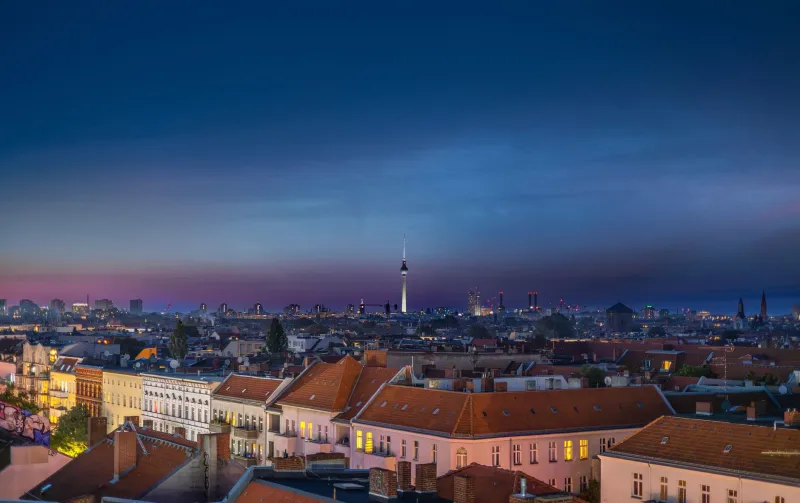
There's a particular kind of silence that settles over a city rooftop at 1 AM. The honking dies down. The delivery trucks disappear. Even the ambient hum of a million air conditioners softens into something almost peaceful. And up there, above the fire escapes and the water towers and the neon glow bleeding off the avenue below, tens of thousands of bees are very much awake.
So is Maya Reyes.
She's been climbing the same six-story walkup in Bushwick every Thursday night for three years, smoker in hand, headlamp strapped to her forehead, checking on four Langstroth hives she keeps on the tar-paper roof of a building her neighbor owns. Most of her friends don't even know she does this. "It's easier to explain at brunch," she says, laughing. "At 2 AM, it just sounds unhinged."
It doesn't sound unhinged to the growing network of urban beekeepers who've made nighttime their preferred shift. Across New York, Chicago, Los Angeles, Detroit, and New Orleans, a loose but expanding community of hobbyists, activists, and food sovereignty advocates are tending hives after dark — partly for practical reasons, partly for philosophical ones, and partly because the city at night just hits different when you're standing inside a living cloud of pollinators.
Why the Night Shift?
The practical logic is straightforward enough. Bees are calmer after dark. They're home, clustered together, not out foraging. For a beekeeper doing inspections or harvesting frames, that means fewer defensive responses, less chaos, and a more predictable experience overall. In dense urban environments where rooftop neighbors, building management, and general public anxiety about stinging insects can all complicate daytime work, nighttime operations also fly under the radar — sometimes literally.
"Nobody's watching at midnight," says Darnell Washington, who keeps three hives on a community garden rooftop in Chicago's South Shore neighborhood. "During the day, someone always has a comment. At night, it's just me and the bees and whatever's happening up in the sky."
But the reasons go deeper than convenience. Many of these beekeepers talk about the night as a kind of sanctuary — a window of time when the city's usual power dynamics soften just enough to let something different grow. For a lot of them, that's the whole point.
Farming as Resistance
Urban beekeeping has always had a political edge, even when it doesn't announce itself that way. In most American cities, the right to keep bees has historically been restricted, regulated, or quietly denied to communities that didn't have the resources or the social capital to fight back. New York City only legalized urban beekeeping in 2010. Chicago followed with its own updated ordinances a few years later. In some cities, the rules remain murky, which means beekeepers in lower-income neighborhoods are often operating in a kind of legal gray zone that their counterparts in wealthier zip codes rarely have to navigate.
Nighttime beekeeping, for some practitioners, is a direct response to that inequity. If the system makes it harder for you to farm openly, you find another way. "My grandmother grew up in Alabama and kept bees her whole life," says Keisha Morales, who tends hives on two rooftops in the Bronx. "The idea that I need permission to do the same thing in my own neighborhood? That's a whole conversation."
For Morales and others like her, the hives aren't just a food project — they're a reclamation. A way of insisting that urban agriculture belongs to everyone, not just the people with the right permits, the right landlords, or the right amount of square footage.
What the Bees Are Actually Doing
Set aside the politics for a second and just look at the ecology. Urban bees, it turns out, are remarkably good at their jobs. Cities are full of diverse flowering plants — street trees, window boxes, community gardens, weedy vacant lots that nobody's gotten around to developing yet — and that diversity produces honey with a complexity that rural monoculture environments often can't match. Chicago rooftop honey tastes different from Brooklyn rooftop honey, which tastes different from honey harvested above a New Orleans neighborhood still thick with flowering jasmine.
"The city is actually a surprisingly rich foraging environment," says Dr. Priya Nair, an urban ecologist at a Midwestern research university who has been studying pollinator health in dense metropolitan areas. "The floral diversity in a lot of urban neighborhoods rivals or exceeds what you'd find in agricultural zones. The bees are doing important work, and they're doing it well."
That work extends beyond the hives themselves. Urban bee colonies support pollination across entire city blocks, quietly improving yields in community gardens, strengthening the root systems of street trees, and contributing to the kind of biodiversity that makes a city more resilient in the face of climate stress. When Reyes's bees fly out from that Bushwick rooftop each morning, they're threading through a neighborhood that's greener and more alive because they're there.
The Midnight Community
What's striking about this movement is how connected it is, despite operating mostly in the dark. Beekeepers share knowledge through late-night group chats, impromptu rooftop visits, and informal mentorship networks that stretch across city lines. Someone in Detroit will troubleshoot a queen problem over text with someone in Oakland at 11 PM on a Tuesday. A Chicago beekeeper will drive a package of bees to a new hobbyist on the South Side at an hour when most people are asleep.
"We joke that we're all on the same schedule," says Washington. "Bee time and city time don't always line up. You learn to work around both."
There are also growing efforts to formalize some of this knowledge — community workshops, sliding-scale beekeeping courses, and rooftop apprenticeship programs aimed specifically at bringing more Black, Latino, and Indigenous practitioners into a hobby that has historically skewed white and well-resourced. Organizations in Brooklyn, Chicago, and New Orleans are doing this work right now, often with minimal funding and maximum determination.
The City as Ecosystem
Here's what the midnight beekeepers understand that the rest of us are still catching up to: the city was never actually separate from nature. It just convinced itself it was. The concrete and the glass and the steel didn't replace an ecosystem — they got layered on top of one that never stopped trying to reassert itself. In the cracks of sidewalks, in the gutters of brownstones, on rooftops nobody's paying attention to, life keeps finding its way.
The bees know this instinctively. They don't care that they're above a laundromat or a taqueria or a block that's been rezoned three times in a decade. They find the flowers. They do the work. They come home.
Maya Reyes climbs back down the stairs around 2 AM, smoker cooling in her bag, a frame of capped honey she'll extract later this week. The street below is quiet. Somewhere a car alarm starts and stops. The city breathes.
"People always ask me what I get out of it," she says. "And I never know how to explain it. It's like — the bees don't know what city they're in. They don't know about rent or zoning or any of it. They just keep building. I think I need to be around that."
So do we.