Night Cartographers: The People Drawing Maps of Cities That Only Wake Up After Dark
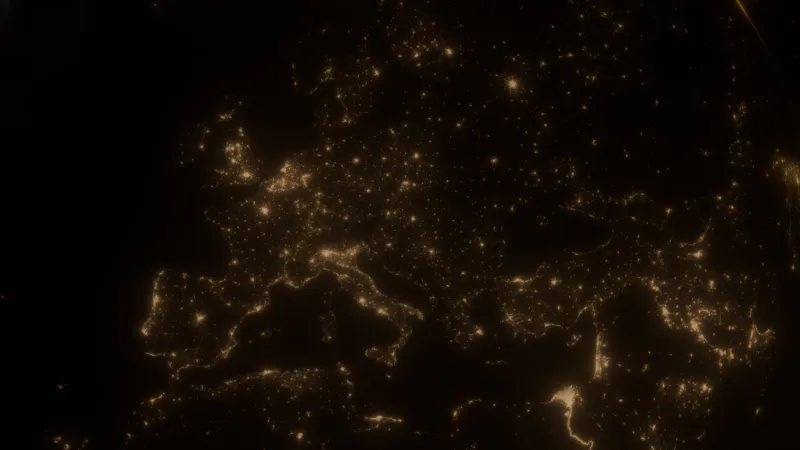
Every city has two faces. There's the one that gets photographed for tourism brochures — coffee shops, lunch crowds, golden-hour skylines. And then there's the other one. The one that surfaces somewhere around midnight, when the buses thin out, the corner stores pull their gates halfway down, and the streets belong to a completely different population. For most of urban planning history, that second city has been functionally invisible. No maps. No data. No policy.
That's starting to change, and the people doing it are a strange, wonderful mix: data nerds pulling transit APIs at 2 AM, community organizers with clipboards walking routes no Uber driver wants to take, and artists who figured out that a map can be a form of protest.
The Data Nobody Was Collecting
Here's the thing about urban data — almost all of it gets collected during business hours. Traffic studies, foot traffic analytics, food access surveys. The machinery of urban planning runs on a 9-to-5 schedule, which means it's been quietly building a picture of cities that erases roughly a third of daily life.
Take transit deserts. We talk a lot about food deserts, but in cities like Houston, Memphis, and even parts of Los Angeles, the real crisis after midnight is a mobility desert. Bus routes drop to skeleton schedules. Ride-share surge pricing kicks in hard. And the people who need to get from a hospital shift to a home three neighborhoods over are just... stranded, working out routes in their heads that no official map has ever acknowledged.
Groups like the Transit Justice Alliance in Chicago and independent researchers affiliated with university urban planning departments have started building what they call "shadow transit maps" — visualizations of where official public transportation fails after 10 PM and what informal systems fill the gap. Informal jitneys. Neighbor networks. The guy with the minivan who runs a de facto late-night shuttle on the south side because he figured out there was demand.
None of that shows up on Google Maps. These cartographers are trying to fix that.
Crowdsourcing the Dark
Some of the most interesting mapping happening right now isn't coming from institutions at all. It's coming from people with smartphones and insomnia.
Platforms like Fulcrum and even heavily customized versions of OpenStreetMap have become tools for citizen cartographers documenting what they call "after-hours urbanism" — the spaces and systems that only activate once the conventional city powers down. Abandoned lots that become informal night markets on weekends. Parking structures that double as makeshift skate spots after midnight. Loading docks where food truck operators gather to share prep space and gossip.
In New York, a loose collective of night-shift workers, many of them delivery workers and hospital staff, have been building a crowdsourced database of 24-hour resources — not just bodegas and diners, but bathrooms, charging stations, safe-waiting spots with decent lighting. The map started as a private Google Sheet passed around in group chats. It's grown into something that gets updated every single night by people who depend on it.
"We called it the real map," said one contributor, a home health aide who works overnight shifts in the Bronx. "Because the other maps — they're not lying exactly, but they're only showing you the city when it's performing for people with money."
What the Night Reveals About Who Cities Are Built For
Here's where it gets political, because it always gets political.
When you actually map the nocturnal city — its resources, its transit gaps, its informal economies, its unlit stretches and its glowing hubs — a pretty uncomfortable picture emerges. The areas with the worst late-night infrastructure are almost always the areas with the least political power. That's not a coincidence. It's a design outcome.
Urban planner and researcher Destiny Okafor, who has been studying nighttime mobility in mid-sized American cities, puts it plainly: "Daytime planning assumes a certain kind of resident. Someone who works standard hours, has a car, lives in a neighborhood that gets regular city services. When you map the night, you see everyone the daytime model was built to ignore."
That includes not just transit gaps but food access. Convenience stores and fast food chains dominate the late-night food landscape in lower-income neighborhoods. Fresh options — the kind that public health advocates push — vanish after 8 PM. Some of the more provocative maps being built right now overlay late-night food access data with health outcome data, and the correlation is exactly as grim as you'd expect.
But the maps are also revealing solutions that already exist, built by communities who didn't wait for city hall. Night markets that address food deserts. Informal mutual aid networks that function as de facto social services. Late-night barbershops that serve as community mental health spaces in ways that no city agency has thought to fund.
Art at the Edge of the Data
Not everyone mapping the night is trying to fix a policy problem. Some of them are just trying to make something beautiful.
Artists like Brooklyn-based Mira Solano have been creating what she calls "emotional cartography" — hand-drawn maps of the nocturnal city that document not just physical infrastructure but atmosphere. Where the light is strange. Where it smells like someone's grandmother's kitchen at 1 AM because a Dominican bakery is starting its morning prep. Where you can hear music bleeding out of a basement window.
These maps don't fit into a GIS database. They're not useful to a transit planner. But they capture something the data maps miss entirely — the texture of the night city, the reason people are drawn to it, the quality of experience that makes the urban night worth fighting for.
"I want people to see that the night isn't just what's left over after the day," Solano says. "It's its own thing. It has its own geography."
What Comes After the Map
Mapping is only half the battle, obviously. The harder part is getting anyone in power to look at what the maps are showing.
There are some encouraging signs. A handful of cities — Minneapolis, Pittsburgh, and Richmond, Virginia among them — have started incorporating nighttime-specific data into their comprehensive planning processes. Some are piloting "night mayor" positions, borrowed from European cities like Amsterdam and Zurich, with a mandate to advocate for nocturnal residents and the informal economies that serve them.
But progress is slow, and the urgency is real. The night city is being reshaped constantly — by gentrification pushing late-night workers further from urban cores, by gig economy logistics transforming who's on the streets and why, by the creeping advance of surveillance infrastructure that documents the night city for very different purposes than community mapping.
The cartographers working in the dark are racing to document something before it disappears or gets documented by someone with worse intentions.
Somewhere out there tonight, someone is walking a route that doesn't exist on any official map, updating a shared spreadsheet, sketching a street corner that will look completely different in six months. They're making a record. They're making an argument.
The city never sleeps. It's about time someone started drawing what it actually looks like.