Voices the City Almost Lost: Meet the Night Owls Keeping Neighborhood Memory Alive
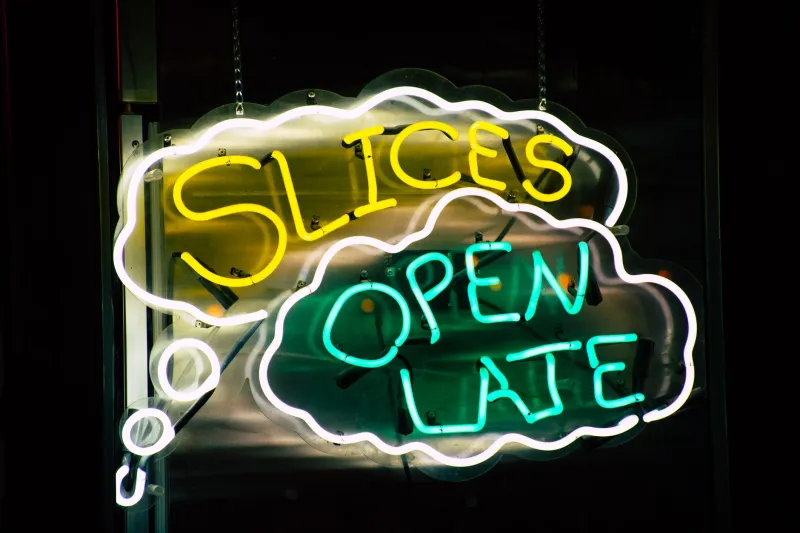
It's 1:30 in the morning in a back booth at a 24-hour diner on the east side of Detroit, and Marisol Reyes has her phone propped against a napkin dispenser, recording. Across from her sits a 74-year-old retired auto worker named Curtis who has been talking for nearly two hours — about the block parties of the early '70s, about the factory floors that once hummed through the night, about a neighborhood that official city records barely acknowledge existed the way he remembers it.
Marisol isn't a journalist. She isn't a historian with letters after her name. She's a graphic designer by day and, by her own description, "a very serious insomniac with a hard drive full of other people's memories." She's also part of a quietly growing movement of grassroots archivists who have decided that if the institutions won't do this work, they'll do it themselves — and they'll do it after dark, because that's when people actually talk.
Why the Night Unlocks Things the Day Won't
There's something almost counterintuitive about it. You'd think the best time to collect history would be during business hours, in well-lit conference rooms, with institutional backing. But ask anyone doing this work and they'll tell you the same thing: nighttime changes the conversation.
"During the day, people are performing," says Darnell Okafor, who runs a one-man digital archive project out of his apartment in Houston's Third Ward. "They're thinking about how they sound. At night, after a few hours, after they've had some coffee or whatever, they start actually remembering instead of reciting."
Darnell started his project — he calls it Third Ward Frequency — three years ago after his grandmother passed and he realized that almost nothing she knew about their neighborhood's history existed anywhere findable. No Wikipedia page. No museum exhibit. No archived newspaper coverage. Just stories, and now they were gone.
So he started collecting. Late-night kitchen table interviews with elderly residents. Digitizing shoeboxes of photographs. Recording oral accounts of businesses, churches, and community organizations that bulldozers and gentrification had erased from the physical landscape but not yet from living memory. He uploads everything to a free-access digital repository and cross-references it with whatever public records he can dig up.
"I'm basically doing what a historical society does," he says, "except I don't have a building, a budget, or any staff. And I work from like ten PM to three in the morning because that's the only time I have."
The Stories That Fall Through Official Cracks
What makes this work urgent — and what makes it distinctly a night-shift operation — is the nature of what's being preserved. Official archives tend to reflect official power. City records document permits and ordinances. Libraries hold newspapers that covered what newspapers chose to cover. Academic institutions preserve what academics decided was worth preserving.
What gets left out is almost everything else: the oral traditions of immigrant communities, the working-class social clubs, the informal economies, the mutual aid networks, the cultural practices that happened in living rooms and on stoops and in church basements and never made the news.
In Chicago's Pilsen neighborhood, a woman named Yolanda Fuentes has spent the last four years conducting late-night interviews — mostly in Spanish — with aging Mexican-American residents whose experiences of the neighborhood's transformation are nowhere in the official record. She works as a nurse during the day. The archive work happens between 10 PM and 2 AM, sometimes later.
"There are women I've talked to who came here in the '60s and built entire community structures from scratch," she says. "They organized, they advocated, they kept families together through impossible circumstances. And there is nothing — nothing — in any official repository that tells their story. That's not an accident. That's a choice someone made about whose history matters."
Yolanda's project, which she calls Memorias del Barrio, now has over 200 recorded interviews, thousands of digitized photographs and documents, and a small but growing online following among researchers, journalists, and — most importantly — the descendants of the people she's interviewing.
Building Archives Without Blueprints
The technical side of this work is its own kind of art form. These aren't people with archival training or institutional resources. They're figuring it out as they go — learning audio editing software at midnight, building rudimentary databases, teaching themselves metadata standards from YouTube tutorials, pooling money for external hard drives and cloud storage subscriptions.
In Philadelphia, a collective called Nightside Memory operates out of a rotating series of apartments and community spaces. They hold what they call "archive nights" — informal gatherings where people bring in physical ephemera (flyers, photographs, letters, receipts, ticket stubs) and spend the evening scanning, tagging, and uploading it to a shared digital library. Someone brings food. Someone else brings a turntable. The work gets done.
"It feels like a party, but it's also preservation," says one of the collective's founding members. "We're saving stuff that would literally end up in a dumpster otherwise."
The challenges are real. Storage costs money. Time is always scarce. And there's the deeper question of what you do with an archive once you've built it — how you make it accessible, how you protect the privacy of people who've shared sensitive stories, how you ensure it survives beyond any one person's hard drive.
But the people doing this work aren't waiting for those questions to be fully answered before they start. The urgency is too immediate. People are getting older. Memories are fading. Neighborhoods are changing faster than anyone can document them.
Cultural Resistance, One Recording at a Time
There's a political dimension to all of this that the archivists themselves are often the first to name. Deciding what gets remembered is an act of power. Challenging that — insisting that working-class stories, immigrant narratives, and Black and brown community histories belong in the permanent record — is an act of resistance.
"Every recording I make is an argument," Marisol says, back in that Detroit diner booth as Curtis wraps up a story about a jazz club that's been a parking lot for thirty years. "It's an argument that this matters. That he matters. That this neighborhood's story is worth telling even though nobody's paying me to tell it."
Curtis laughs when she says this. He's heard her say it before. He thinks she's a little intense, he says, but he keeps showing up to these late-night sessions. He keeps talking.
Because someone is finally listening — and because the night, as it turns out, is long enough to hold everything the city has been trying to forget.
Goodnight Traffic City is always looking for stories from the people keeping urban memory alive. Know someone doing this work? Hit us up.