After Midnight, Someone Leaves You a Book: The Guerrilla Readers Seeding Stories Across America's Forgotten Neighborhoods
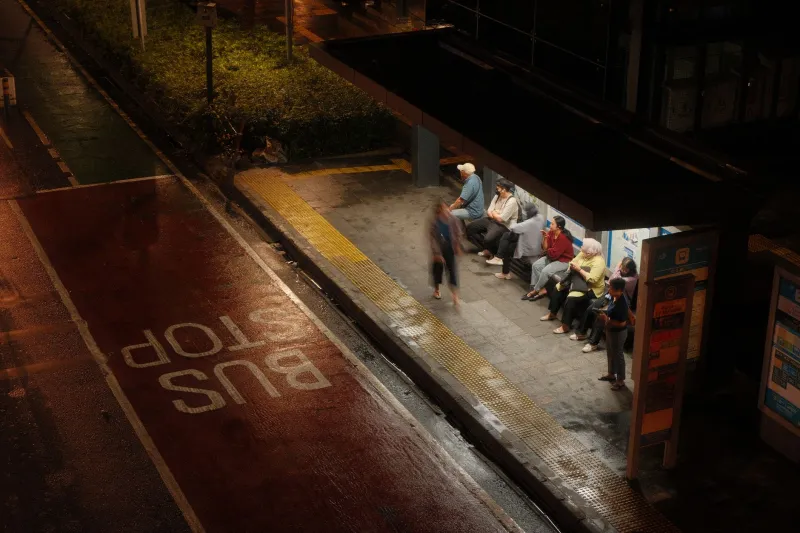
It's 2:47 AM on a Tuesday in East Cleveland. A figure in a dark hoodie moves quietly along a stretch of Kinsman Road that hasn't seen a bookstore in over a decade. They're carrying a canvas tote bag — not heavy enough to be groceries, not shaped right to be laundry. At a bus shelter with a cracked plastic wall and a schedule that hasn't been updated since 2019, they pause. They reach in. They leave something behind.
A book. Their Eyes Were Watching God by Zora Neale Hurston, with a hand-stamped message inside the front cover: This belongs to whoever needs it next.
By sunrise, it'll be gone.
The Drop Network Nobody Officially Runs
Across the country, a loose, largely anonymous movement of nocturnal book distributors is quietly doing what libraries are underfunded to do and what publishers have zero financial incentive to attempt: getting literature into the hands of people in communities that the mainstream literary ecosystem has written off.
They call themselves different things — or nothing at all. Some operate under collective names in online forums. Others are solo operators who post obliquely on neighborhood apps about "something good" being left at a particular corner. The organizing principle isn't ideology, exactly. It's more like urgency. Books exist. People exist. The gap between them, especially after dark in low-income urban neighborhoods, is unconscionable.
"I live in a part of the city where the nearest Barnes & Noble is a forty-five-minute bus ride," says one Chicago-based distributor who goes by the handle Paperthin on a Discord server dedicated to urban literary drops. "The public library branch near me closes at six. Six. That's not a library. That's a suggestion."
So she goes out at night. Three or four times a month, she loads up with donated and secondhand books and moves through her neighborhood like a one-woman distribution center — transit hubs, 24-hour laundromats, the vestibules of apartment buildings where she knows the super. She leaves books the way some people leave prayers.
Little Free Libraries, Radicalized
You've seen Little Free Libraries — those charming wooden boxes that started popping up in front yards around 2009. Sweet concept. But in many cities, they've become a proxy for neighborhood demographics: well-stocked in gentrified zip codes, bare or broken in the ones that got left behind.
A growing number of midnight distributors are specifically targeting underserved LFL locations, restocking them not just with whatever surplus they have lying around but with intentional selections. Banned books are a particular focus.
Since the wave of school and library book bans accelerated in 2021, networks in states like Texas, Florida, Missouri, and Tennessee have made a point of distributing titles that local governments have tried to pull from shelves. Gender Queer. The Hate U Give. Stamped: Racism, Antiracism, and You. And Tango Makes Three. Books that some school board somewhere decided kids — and let's be honest, adults — shouldn't have access to.
"Banning a book is an advertisement," says Marcus, a distributor in Memphis who works with a loose coalition he describes as "just people who got mad." "Every time a title gets pulled somewhere, our request list gets longer. People want those books. They want them specifically because someone said no."
His crew doesn't just restock LFLs. They build new ones — unofficial, unlicensed, sometimes just a weatherproofed crate zip-tied to a fence post. No permit. No HOA approval. Just books in a box, available to anyone, at any hour.
Transit as Library
If you ride the overnight bus in certain American cities, you might already know about this. The L in Chicago. The MARTA in Atlanta. The night buses in LA that nobody who doesn't have to ride them ever talks about.
For a significant population of overnight transit riders — service workers, unhoused individuals, people working the kind of jobs that start at 4 AM or end at 3 — public transit is effectively a living space for several hours a night. And for years, some distributors have been treating it accordingly.
Books get tucked into overhead racks. Paperbacks get left on seats with notes that say keep it or pass it on. In a handful of cities, there are transit-specific drops organized with enough regularity that riders have started to expect them — even look forward to them.
"I had a woman stop me once," recalls Deja, who does book drops on the night bus in Philadelphia. "She recognized the stamps I put in the covers. She said she'd read four books she found on the bus over the past year. She cried. I cried. We were both on the 42 at 2 AM, crying about books."
That's the thing about this movement that doesn't translate easily into think-piece language. It's not abstract. It's not theoretical cultural resistance. It's a specific woman on a specific bus reading a specific book that someone left for her, and something in her life being different because of it.
The Politics of the Midnight Drop
Not everyone is romantic about this. Some librarians and literacy advocates push back on guerrilla distribution, arguing it sidesteps the infrastructure that communities actually need — more funding, better hours, more staff. Leaving books in bus shelters doesn't fix a library system gutted by austerity politics.
Fair point. The distributors mostly agree with it.
"Nobody thinks this is a substitute for real investment," says Paperthin. "We're not delusional. We know a paperback in a laundromat doesn't fix anything structurally. But people need to read now. Not after the next bond measure passes. Now."
There's also the question of what gets distributed and by whom — a conversation the more self-aware corners of this world take seriously. Showing up in a Black or brown neighborhood with a bag full of books curated by white distributors carries its own set of assumptions. The most thoughtful operations involve people from the communities they're serving, prioritizing authors and stories that reflect those communities back at themselves.
"I'm not out here dropping Hemingway," Marcus says, with a laugh that makes clear this is a considered position, not a throwaway line. "I'm dropping James Baldwin. Octavia Butler. Sonia Sanchez. I want someone to pick up a book at midnight and see themselves in it. That's the whole point."
What Gets Left Behind
The city at night has a way of making certain things visible that daylight obscures. The people who are always there — working, moving, surviving — but who somehow never appear in the daytime narrative of urban life. The midnight book distributors are, in their own way, part of that same nocturnal ecosystem. They move through the same hours, serve the same overlooked populations, operate in the same gaps.
And like the best of what happens after dark in American cities, what they're doing is both deeply practical and quietly radical. A book is a small thing. A book left for a stranger at 3 AM, in a neighborhood where the story has always been told by someone else, is something else entirely.
Somewhere on Kinsman Road, the sun is coming up. The bus shelter is empty except for a schedule nobody updates and a book somebody left. Maybe it'll still be there when the first commuters arrive. Maybe it'll already be inside someone's bag, halfway through the first chapter, changing something.
Either way, someone came through last night. Someone always does.