Dark Kitchen, Real Food: The After-Hours Culinary Underground Rewriting Urban Eating
Photo: ALAN SCHMIERER, CC0, via Wikimedia Commons
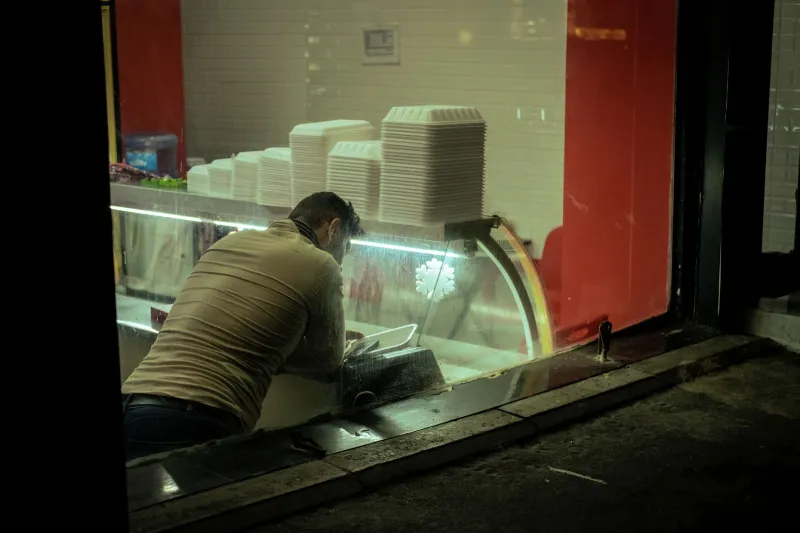
The address is a loading dock behind a strip mall in the Boyle Heights neighborhood of Los Angeles. There's no sign. The door is metal, propped open with a cinder block, and the smell coming out of it at 1:30 AM is extraordinary — chile negro and rendered fat and something sweet underneath that turns out to be piloncillo. Inside, Esperanza Ruiz is forty-five minutes into a four-hour shift that will produce roughly 300 tamales for delivery before dawn.
This is not a restaurant. It has no dining room, no Yelp page, no Instagram grid of artfully plated dishes. It is, in the language of the current food industry moment, a ghost kitchen — a delivery-only operation running out of a shared commercial space. But that label, with its slightly spooky corporate connotations, doesn't quite capture what's actually happening here.
What's happening here is a food revolution, and it smells incredible.
What a Ghost Kitchen Actually Is (and Isn't)
The term "ghost kitchen" got popularized by venture capital-backed operations that used the model to cut overhead and maximize delivery app margins. That version of the concept — faceless, algorithm-optimized, often just a rebranded Applebee's running out of a Denny's kitchen — generated a lot of justified skepticism.
But the ghost kitchen model has also created genuine opportunity for independent operators who couldn't previously afford the cost of a traditional restaurant buildout. A shared commercial kitchen rented by the hour. A delivery radius mapped to a specific community. A menu built around the food that actually exists in a neighborhood's culinary memory rather than what a focus group said would sell.
For immigrant entrepreneurs, home cooks going legit, and chefs who've spent years working other people's lines, the low-barrier overnight model has opened a door that the traditional restaurant industry kept firmly shut.
"I could not afford to open a restaurant," Esperanza says, not stopping her work. "This I could afford. And people are hungry at night. Real hungry, not just for food."
The Night Shift Economy Needs to Eat
Here's a thing that gets overlooked in most conversations about urban food access: a huge portion of American workers are not available to eat during the hours when food is traditionally available. The nurse finishing a 12-hour shift at 7 AM. The warehouse worker clocking out at 2 AM. The security guard, the hotel front desk staff, the overnight stocker, the Uber driver who's been on the road since 10 PM.
These workers — disproportionately Black and brown, disproportionately working class — have historically been served by a combination of fast food drive-throughs and whatever they can heat up at home. The ghost kitchen and late-night pop-up ecosystem is beginning to fill that gap with something better.
In Chicago's Pilsen neighborhood, a collective of three Latinx-owned ghost kitchen operations has started coordinating their overnight hours so that between them, they cover everything from breakfast-adjacent to full dinner service, all available for delivery between 10 PM and 5 AM. The collective started during the pandemic, born out of necessity, and it's still running because the demand never stopped.
Coordinator and co-founder Javier Mendoza describes the customer base as "the invisible city." "These are people the restaurant industry was never really building for," he says. "But they're hungry. They work hard. They deserve good food."
Cuisine as Neighborhood Identity
One of the more interesting cultural dynamics emerging from the after-hours food economy is the way it's allowing underrepresented culinary traditions to establish a foothold in cities where they might otherwise be squeezed out by rising rents and the economics of traditional restaurant real estate.
In Houston — a city with one of the most genuinely diverse food cultures in the country — several overnight ghost kitchen operators are running menus rooted in West African, Vietnamese, and Central American traditions that have limited brick-and-mortar representation in the neighborhoods where their customers live. The delivery model sidesteps the geography of food access in a way that a physical restaurant simply can't.
Chef Adaeze Nwosu runs an Igbo-influenced overnight kitchen in Houston's Third Ward. Her menu leans into the kinds of dishes that rarely appear on American restaurant menus — not the accessible crossover items, but the real thing, for a customer base that's been hungry for it.
"My grandmother's food," she says simply. "That's what I'm making. And people are finding it."
The delivery app algorithm is, for once, working in someone else's favor.
The Pop-Up as Community Anchor
Not all of the after-hours food action is delivery-only. In cities across the country, a parallel ecosystem of late-night pop-ups has developed — temporary operations that set up in parking lots, bar back rooms, and community spaces to feed people in person during the hours when most kitchens are dark.
These operations exist in a complicated regulatory gray area, and their operators navigate that reality with a combination of pragmatism and community goodwill. They're not trying to evade accountability — most of them work out of licensed commercial kitchens and take food safety seriously. They're navigating a permitting and licensing system that was not designed with them in mind.
What they offer in return is something that delivery alone can't provide: the social experience of eating together. At 2 AM. In a parking lot. With your neighbors.
In that sense, the late-night pop-up is doing something that's always been at the heart of urban food culture — creating a gathering place, a reason to be together, a shared table in a city that can feel relentlessly atomizing.
Esperanza finishes her shift as the sky outside the loading dock starts to lighten. The tamales are boxed, labeled, and picked up by a driver who will have them at doorsteps before most of the city has made its first cup of coffee.
She locks up, walks to her car, and drives home through streets that are just beginning to stir.
The city ate tonight. It always does. It just depends on who's cooking.