Every Route Tells a Story: The Transit Workers Who Know This City Better Than Anyone
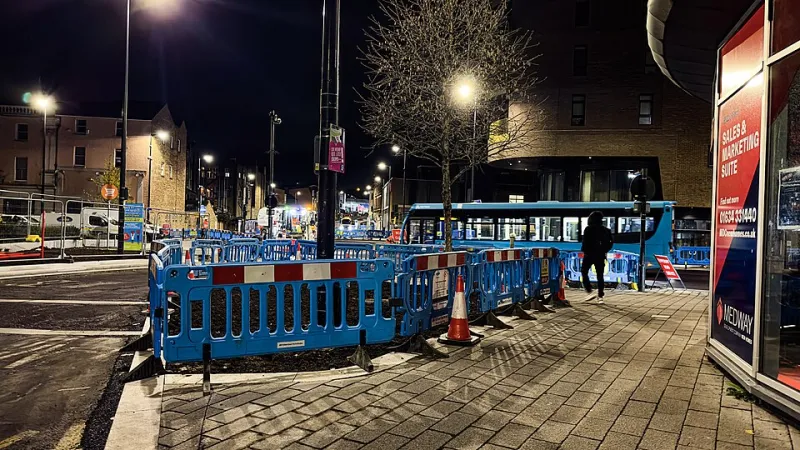
Photo: OathOn, CC BY-SA 4.0, via Wikimedia Commons
Marcel Thibodeaux has driven the same overnight bus route through New Orleans' 9th Ward for going on nineteen years. He can tell you exactly which corner used to have a barbershop that smelled like bergamot and old magazines. He can point to a vacant lot and describe the three-flat that stood there before Katrina, before the insurance fights, before the silence. He doesn't write any of this down. He just knows.
"The route changes," he says, easing the bus through a green light at 2:47 in the morning, "but I don't forget what was there before."
Across American cities, transit workers like Marcel are doing something that no urban planning department, no app, no data dashboard has ever managed to replicate. They're witnessing the city in real time — shift after shift, decade after decade — accumulating an archive of lived knowledge that is completely invisible to official record-keeping. They are, without any formal title or compensation for the role, some of the most thorough historians their cities have ever produced.
The View From the Driver's Seat
There's a particular kind of attention that develops when you navigate the same streets for years on end. It isn't passive. Transit workers describe something closer to a heightened spatial memory — a mental map that layers time on top of geography. A corner isn't just a corner. It's every version of that corner they've ever seen.
Keisha Morales, a subway operator on Chicago's Red Line who works the overnight window, puts it plainly: "I know when a neighborhood is changing before the news does. You start seeing different faces at certain stops. The 3 AM crowd shifts. Someone who used to ride every night stops showing up. A stop that was always empty starts filling up."
These micro-observations accumulate into something profound. Keisha has tracked the slow displacement of long-term residents from Pilsen not through census data but through the changing composition of who boards at which stop and at what hour. She's watched new coffee shops appear and old taquerias disappear, measured in the patterns of who's traveling where and when.
This is the city as a living document, and transit workers are reading it in real time.
Dispatchers and the Invisible Grid
If drivers and operators see the city through a moving window, dispatchers experience it as a constantly shifting map of human need. Tony Vasquez has worked overnight dispatch for a taxi and rideshare hybrid company in Phoenix for eleven years. From his headset, he tracks hundreds of drivers navigating a city most residents never see after midnight.
"You learn the geography of desperation," he says, without drama. "Certain addresses come up over and over at certain hours. The ER. The shelter on McDowell. The casino. The bus station at 4 AM." He's built up an almost sociological understanding of the city's pressure points — the places where people are in transit not by choice but by circumstance.
Tony has started quietly writing some of it down. Not for any publisher or institution. Just for himself. "I keep thinking someone should know this stuff. The patterns. Where people are going and why."
He's right, and the fact that no one is formally collecting it says something uncomfortable about whose knowledge gets valued.
What the Overnight Shift Reveals
The overnight window is its own distinct city. Everyone who works it knows this. The people on a bus at 2 AM are not the same population as the people on that bus at 8 AM — not demographically, not economically, not emotionally. Night transit workers become intimately familiar with the populations that daylight city life tends to obscure: the workers finishing double shifts, the unhoused residents riding to stay warm, the young people navigating a city that doesn't fully belong to them yet.
Lorraine Dupree, a veteran bus driver in Atlanta, describes the overnight route as "a confessional on wheels." People talk to her. They always have. "When it's late and the bus is mostly empty, people open up. I've heard things — real things about real lives — that nobody would ever say in the daytime."
She's careful about what she shares. But she's been quietly collecting stories for years, and she's started collaborating with a local oral history project to get some of them on record. "These are Atlanta stories. They belong to Atlanta."
The Archivists Nobody Hired
What's striking about transit workers as historians is the completeness of their perspective. They don't parachute into a neighborhood for a story and leave. They return, again and again, across years and decades. They see the before, the during, and the after of every urban shift — gentrification, disinvestment, disaster, revival.
And crucially, they see it from the street level, not the satellite view. Not from a conference room or a policy brief. From the driver's seat at 3 AM, in the rain, watching a city that never entirely stops moving.
Some cities have started to recognize this. A handful of transit authorities have partnered with local universities and cultural institutions to begin oral history projects with longtime workers. It's a start. But the scale of what's being lost — the accumulated knowledge of thousands of workers who retire or move on without anyone thinking to ask — is staggering.
Marcel finishes his route as the sky over New Orleans starts to go from black to a deep bruised purple. He pulls the bus back into the depot and climbs down with the slow deliberateness of a man who's done this ten thousand times.
Someone should be writing all of this down. Someone should be paying him for it.
Until then, the city's real history rides the overnight bus, invisible and irreplaceable, kept alive by the people who never stop showing up.