Glitch Gods: The Late-Night Digital Designers Rewiring How American Cities Look
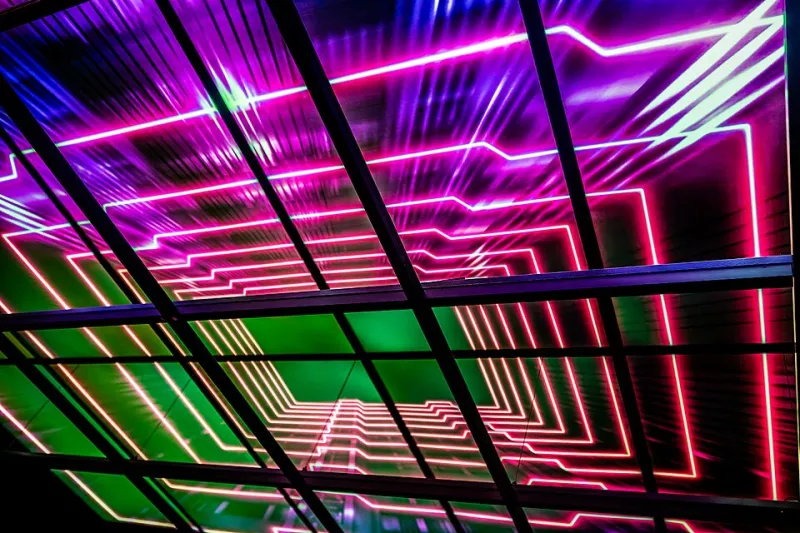
Photo: Michael Gaylard from Horsham, UK, CC BY 4.0, via Wikimedia Commons
There's a moment somewhere around 2 AM when a city stops performing and starts just being. The hustle quiets down, the foot traffic thins out, and the neon signs start talking to nobody in particular. For a specific breed of creative — part graphic designer, part technologist, part urban philosopher — that's exactly when the real work begins.
These are the people quietly drafting what your city is going to look like in ten years. And most of them are doing it in spaces you'd never notice: a converted warehouse in Chicago's Pilsen neighborhood, a shared studio above a dim sum spot in San Francisco's Tenderloin, a back room in a Bushwick co-working space that smells like soldering iron and cold brew. They don't have big agency clients or glossy portfolios on Behance. What they have is a vision for urban space that most city planners haven't caught up to yet.
The Visual Language Nobody Taught Them
Ask any of these designers where they learned their craft and you'll get the same half-laugh, half-shrug combo. Formally? Maybe a semester of typography, a YouTube rabbit hole into motion design, a bootcamp in UI. But the real education happened in the city itself.
Marcus Delray, a 29-year-old motion artist based in Atlanta, describes spending years just reading the city. Not books about the city — the city itself. "I'd ride MARTA at midnight and study the signage," he says. "The way the light hits a platform sign at 1 AM is completely different from noon. The whole emotional register changes. I wanted to design for that version of the city."
What Delray and designers like him are building isn't just pretty visuals. It's a full rethinking of how information, identity, and art coexist in public space. They're creating subway signage concepts that shift typographically based on time of day. They're building augmented reality overlays that turn blank walls into interactive murals when you point your phone at them. They're imagining transit maps that behave less like diagrams and more like living organisms.
The tools have caught up to the ambition, finally. Affordable motion design software, accessible AR development platforms, open-source type foundries — the barriers that once kept this kind of experimental work locked inside corporate design firms have essentially dissolved. The result is a decentralized creative explosion happening in studios across every major American city, mostly after dark.
The AR Street You're About to Walk Down
One of the most exciting frontiers these designers are working in is augmented reality public art — and it's further along than most people realize. In Los Angeles, a loose collective called Signal/Noise has been quietly installing AR anchor points across Echo Park and Highland Park, invisible to the naked eye but unlocking layered visual experiences for anyone with the right app. Think digital murals that breathe, react to weather data, or change based on the neighborhood's historical archives.
"We're not trying to replace physical street art," explains Yolanda Reyes, one of Signal/Noise's founding members. "We're adding a layer. The wall is still the wall. But the wall can also be something else at the same time." Reyes, who works a day job in motion graphics for a streaming platform, does most of her collective work between 11 PM and 3 AM. It's not insomnia — it's scheduling. "The city gives you more room at night. Literally and creatively."
This layered thinking — the idea that urban space can hold multiple simultaneous realities — is central to how this generation of designers approaches their work. They grew up in cities that were already dense with competing visual noise: ads, graffiti, screens, architecture. Rather than trying to cut through the clutter, they've learned to work within it, adding depth rather than volume.
Signage as Political Act
Not everything being cooked up in these late-night studios is abstract or speculative. Some of it is pointedly political. A Brooklyn-based designer collective called Typeface Riot has been developing a full alternative signage system for New York's subway — one that centers multilingual accessibility, incorporates neighborhood-specific cultural iconography, and uses color theory informed by research on how different communities perceive and navigate public space.
"The MTA's signage system was designed by and for a very specific idea of who a New York commuter is," says collective member DeShawn Okafor. "We're asking: what if you redesigned it for everyone who actually rides the train?" Their proposal, which lives online and has been presented at a handful of independent design conferences, has attracted attention from urban planning academics and transit advocacy groups — though not yet from the MTA itself. They're not holding their breath.
This is a recurring theme in the underground design world: work that's years ahead of any institution's ability to adopt it. These designers aren't waiting for permission or commissions. They're building the future in their own time, on their own terms, and releasing it into the world through open-source files, zine drops, and late-night Instagram posts.
Where the City Never Sleeps, the Work Never Stops
There's something deeply fitting about the fact that the people imagining tomorrow's cities are doing it at the exact hours when those cities are most themselves. No tourists. No performance. Just the city running on its own internal logic, humming along under sodium-vapor lights while a designer somewhere stares at a monitor, tweaking a kerning value for the forty-seventh time.
The mainstream design world will catch up eventually. It always does. The big agencies will hire some of these people, the city governments will commission some of their concepts, and in fifteen years the aesthetic these late-night glitch gods are developing right now will feel completely normal — the visual wallpaper of American urban life.
But right now, in this specific moment, it still feels like a secret. And secrets are always better after midnight.